
En nuestra búsqueda de museos del humor, encontramos países que, a pesar de afirmar que no existen, cuentan con uno o dos espacios museísticos que pueden interpretarse como pertenecientes a este concepto.
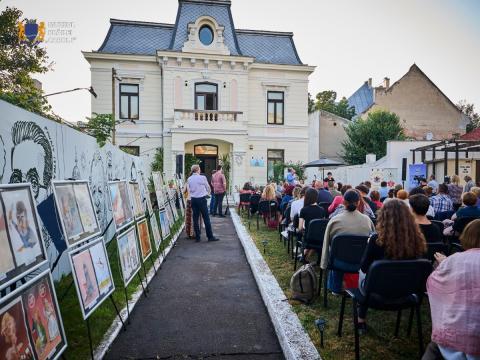
Así, aunque la mayoría afirma que no hay museos del humor en Rumania, en nuestra investigación encontramos el Muzeul Brailei "Carol I", que también alberga la Casa Umorului Desenat, dedicada al humor gráfico. Nos pusimos en contacto con su directora, Elena Nicoleta Albu, pero lamentablemente no obtuvimos respuesta.
Al visitar su sitio web, obtuvimos la siguiente información: «Una sección del Museo "Carol I" de Brăila, dedicada al arte humorístico, abrió sus puertas al público en otoño de 2023, cuando acogió la 18.ª edición del Salón Internacional de Caricatura de Brăila, organizado por el Centro Distrital para la Preservación y Promoción de la Cultura Tradicional de Brăila, en colaboración con el Museo "Carol I" de Brăila.
La ceremonia de entrega de premios del salón y la inauguración de la exposición, que presentaba algunas de las obras participantes en el concurso, sirvieron de preámbulo a la experiencia que ofrecen las obras expuestas en las paredes de la Casa del Humor en Cartum». Cuatro exposiciones individuales, con obras de la colección del museo, de los artistas Victor Chiriloaie (Chiril), Florian-Doru Crihană, Constantin Pavel y Leonte Năstase, se presentan verticalmente, una en la planta baja y la otra en la primera planta. Estas exposiciones muestran los valores del grabado satírico y están interconectadas por murales del artista de Galați, Viorel Baciu, que representan diversos puntos de referencia. Entre los nombres destacados del arte humorístico (grabado, ilustración, animación) se encuentran Ion Popescu-Gopo, Alexandru Clenciu, Albert Poch, Nell Cobar, Mihai Stănescu, Mihai Pînzaru-Pim, Victor Chiriloaie y Florian-Doru Crihană. El Museo "Carol I" de Brăila ha creado una colección de más de 1500 obras a partir de esta colección, que utiliza periódicamente para organizar diversos eventos culturales.
Otra serie de obras, representativas de la riqueza del espacio expositivo recién inaugurado, llevaban las firmas de los artistas: Constantin Ciosu, Gabriel Rusu, Julian Pena – Pai, Mihai Pânzaru – Pim, Valeriu Kurtu, Aurel Ștefan Alexandrescu, Radu Clețiu, Marian Avramescu, Adrian – Vasile Trestian, Ovidiu Ambrozie Borta (Boa), Dragoș Anton, Vladimir Crivoi–Vlahi, Florian Vîlsan, Valeriu Ionițoi, Goran Celicanin y Janos Szilveszter.
A través de exposiciones temporales, la Casa ofrece una rica y diversa colección de humor visual, compuesta por obras gráficas y pictóricas originales de artistas rumanos y extranjeros, premiadas en diversos festivales, concursos y salones nacionales e internacionales, así como carteles, revistas, diplomas, medallas y trofeos, ofrecidos como obsequios artesanales por artistas y figuras culturales oficialmente reconocidas como miembros fundadores: Florian-Doru Crihană, Leonte Năstase, Gabriel Rusu, Constantin Pavel, Marian Avramescu, Radu Clețiu, Dodo Niță, Marius Tița, Julian Pena-Pai, Mihai Boboc, Ovidiu Ambrozie Borta y Adrian Vasile Trestian.
Sin embargo, la función de la Casa no se limita a valorar el patrimonio únicamente a través de exposiciones. Además, también funciona como un espacio educativo dedicado a fomentar una mayor apreciación del humor y la sátira en la sociedad contemporánea, acogiendo diversos talleres de educación museística, recitales, obras de teatro, concursos y estrenos, así como diversos encuentros creativos con artistas.»
Sabemos poco más sobre las actividades posteriores, pero esperamos que dentro de dos años esta institución continúe trabajando en la misma dirección.
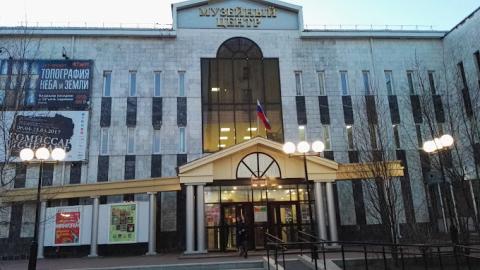
Pasando a Rusia, lamentablemente, no hay mucha información disponible, pero sí encontramos algunas pistas. Comenzaremos con la ciudad de Surgut, en Siberia Occidental, y su museo municipal (MBUK "SKhM"), fundado en 1992 como motor cultural de la región.
Su sitio web afirma que: "Durante 25 años, desde la fundación del museo en 1992, su directora permanente fue Svetlana Viktorovna Kruglova. Ella fue quien inició, impulsó y curó proyectos que glorificaron al Museo de Arte Surgut no solo en la región, sino en Rusia y en el extranjero: el Foro Internacional de Humor Visual CARICATURUM, CUCLANDIA, el proyecto artístico ARCHEO "Regreso a Yakh" y el proyecto fotográfico "Mito del Mito".» Desde 2018 hasta la actualidad, la directora del museo es Olga Sergeevna Perepechina.
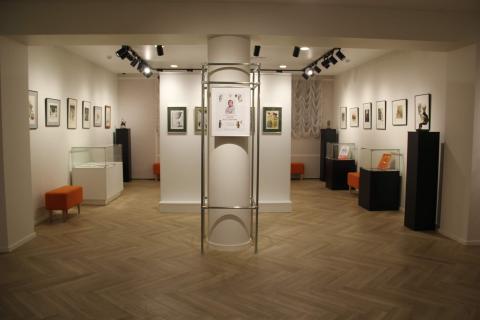
Viajando hacia el oeste, en Snezhinsk Ozersk, en la región de los Urales, encontramos un importante bastión del humor gráfico ruso: el Club de Caricaturistas de los Urales "Arándano" (Клюква), que existe desde hace 41 años. Esta institución organiza un importante Festival Internacional de Caricaturas (en 2026 con su (17.ª edición) junto con exposiciones temporales. Con su colección, ha creado un espacio museístico llamado Museo de Dibujos Animados del Club Cranberry, dirigido por Nikolay Chernyshev.
Siguiendo hacia el ocidente, en Kozmodemyansk, encontramos un Museo de la Sátira y el Humor dedicado al personaje ficticio Ostap Bender, de las novelas satíricas «Las doce sillas» y «El becerro de oro» de Ilf y Petrov. La ciudad ficticia de Vasyuki, en el libro, está basada en la ciudad real de Kozmodemyansk. En otras palabras, no se trata de humor gráfico; su colección consiste en objetos recreados a partir de las páginas de los libros, y celebra un festival anual de sátira y humor llamado «Benderiada», generalmente el penúltimo sábado de julio.
Más al puesta de sol, en Tver, encontramos el Museo de la Cabra, fundado en 2008, que utiliza el humor para educar a los visitantes sobre la historia y la cultura de la ciudad, profundamente ligadas a la imagen de la cabra. Ofrece exposiciones interactivas, información educativa y divertidas oportunidades para tomar fotografías. Alrededor de 3500 piezas de 40 países se exhiben en las salas del museo, representando la imagen de la cabra en la historia, la cultura y la mitología de las naciones del mundo. El tema principal del museo es la historia de la expresión "la cabra de Tver". La exposición se centra en las leyendas que pudieron haber originado este peculiar apodo para los habitantes de Tver. El museo ofrece programas educativos y visitas guiadas originales.
Al acercarse a la capital, la información obtenida es contradictoria, ya que algunos afirman que no existe un museo dedicado a la caricatura en Moscú, aunque el tema puede abordarse en exposiciones temporales en instituciones más grandes, como la Galería Tretiakov o el Museo Estatal Pushkin de Bellas Artes. El Museo Estatal de Literatura alberga la colección "La escoba de la sátira, el pincel del humor: Mayakovsky en caricaturas", que formó parte de la exposición "20 años de la obra de Mayakovsky", celebrada en 1930 en el Klub Pisatelei (Club de Escritores), y que posteriormente se enriqueció con donaciones de otros importantes futuristas (Kruchenykh, Guro, Kamensky, Siniakova, entre otros). Las donaciones incluyen un gran número de caricaturas de Mayakovsky y del propio Mayakovsky, así como una acuarela satírica, Pokhod Igoria Severianina na Berlin (El acercamiento de Igor Severyanin a Berlín, 1914), de Mikhail Le Dantiu, líder del grupo futurista Beskrovnoe ubiistvo (Asesinato sin sangre).
Pero, finalmente, encontramos un museo de caricaturas en la capital rusa. Según Irina Zhuravleva, se trata del Museo de la Caricatura de Moscú, que, según ella, «es un destino encantador para quienes aprecian el humor, la sátira y el poder del arte para comentar la sociedad. Ubicado cerca de la histórica calle Arbat, este museo exhibe más de 2000 caricaturas, viñetas políticas y bocetos humorísticos creados por artistas rusos a lo largo de los últimos dos siglos. Los visitantes pueden explorar exposiciones que capturan el ingenio, la ironía y la creatividad de la caricatura como forma de arte y herramienta de crítica social». ¿Es cierto? ¿Aún existe?
En un país donde los artistas del humor han sufrido graves ataques contra su integridad física y su libertad de expresión, este panorama resulta bastante alentador; es una lástima que no hayamos podido obtener respuesta a las entrevistas que enviamos.
PS: Como he mencionado varias veces, el mundo de los museos del humor es muy volátil e incierto: algunos desaparecen repentinamente, pero otros surgen constantemente. De repente, sin haber oído hablar de la inauguración, descubro que hay un nuevo Museo del Humor Gráfico en Portugal. Se trata del Museo PortoCartoon, inaugurado el 8 de noviembre de 2025 en el Palacio de las Artes de Oporto.
El Museo Nacional de Prensa de Oporto (fundado en 1997) organizó el Festival Internacional PortoCartoon durante dos décadas (del que fui uno de los fundadores), pero cerró en 2022 debido a oscuros problemas políticos y económicos. Este museo contaba con una Galería Internacional de Caricaturas, ya que no devolvía las obras presentadas a los artistas, creando así una gran colección. Este material constituye la base del nuevo Museo, inaugurado en un espacio donde conviven diversos proyectos, el Palacio de las Artes (Largo de S. Domingos 21, Oporto).
Roménia

Roménia

Roménia
Russia
Russia

Russia

Russia
Museums of Humor in the World | Romania - Russia
By Osvaldo Macedo de Sousa.
In pursuing this quest for humor museums, we found countries that, despite claiming they don't exist, always have one or two museum spaces that can be interpreted as belonging to this concept we are seeking.
Thus, although most say there are no Humor Museums in Romania, in our research we found the Muzeul Brailei "Carol I" which also houses the Casa Umorului Desenat, dedicated to graphic humor. We contacted its director, Elena Nicoleta Albu, but unfortunately she did not respond.
Visiting their website, we obtained the following information: "A section of the Brăila "Carol I" Museum, dedicated to humorous art, was opened to the public in the autumn of 2023, when it hosted the 18th edition of the Brăila International Caricature Salon, organized by the District Center for the Preservation and Promotion of Traditional Culture of Brăila, in collaboration with the Brăila "Carol I" Museum.
«The salon's awards ceremony and the opening of the exhibition, featuring some of the works participating in the competition, represented a prelude to the experience offered by the works on the walls of the House of Humor in Cartum. Four solo exhibitions, featuring works from the museum's collection, by artists Victor Chiriloaie (Chiril), Florian-Doru Crihană, Constantin Pavel, and Leonte Năstase, are positioned vertically, one on the ground floor and the other on the first floor. These exhibitions showcase the values of satirical printmaking and are interconnected by mural drawings by the Galați artist Viorel Baciu, which depict various points of reference. Prominent names in humorous art (printmaking, illustration, animation) include Ion Popescu-Gopo, Alexandru Clenciu, Albert Poch, Nell Cobar, Mihai Stănescu, Mihai Pînzaru-Pim, Victor Chiriloaie, and Florian-Doru Crihană. The Brăila "Carol I" Museum has created a collection of over 1500 works from this collection, which it periodically uses to organize various cultural events.
Another series of works, representative of the richness of the newly opened exhibition space, bore the signatures of the artists: Constantin Ciosu, Gabriel Rusu, Julian Pena – Pai, Mihai Pânzaru – Pim, Valeriu Kurtu, Aurel Ștefan Alexandrescu, Radu Clețiu, Marian Avramescu, Adrian – Vasile Trestian, Ovidiu Ambrozie Borta (Boa), Dragoș Anton, Vladimir Crivoi–Vlahi, Florian Vîlsan, Valeriu Ionițoi, Goran Celicanin and Janos Szilveszter.
Through temporary exhibitions, the House offers a rich and diverse collection of visual humor, consisting of original graphic and painting works by Romanian and foreign artists, awarded at various national and international festivals, competitions and salons, as well as posters, magazines, diplomas, medals and trophies, offered as handcrafted gifts by artists and cultural figures officially named founding members: Florian-Doru Crihană, Leonte Năstase, Gabriel Rusu, Constantin Pavel, Marian Avramescu, Radu Clețiu, Dodo Niță, Marius Tița, Julian Pena-Pai, Mihai Boboc, Ovidiu Ambrozie Borta, Adrian Vasile Trestian.
However, the House's role is not limited to valuing heritage solely through exhibitions. Furthermore, it also serves as an educational space dedicated to developing a deeper appreciation of humor and satire in contemporary society, hosting various museum education workshops, recitals, plays, competitions and premieres, or various creative encounters with artists.»
We know little more about subsequent activities, but we hope that after two years this house will continue to work in the same direction.
Moving on to Russia, unfortunately, there isn't much information available, but we did find some clues. We'll start with the city of Surgut in Western Siberia and its municipal museum (MBUK "SKhM"), founded in 1992 as a cultural engine for the region.
Its website states that: «For 25 years, from the museum's founding in 1992, its permanent director was Svetlana Viktorovna Kruglova. She was the one who initiated, was the ideologue and curator of projects that glorified the Surgut Art Museum not only in the region, but in Russia and abroad: the CARICATURUM International Forum of Visual Humor, CUCLANDIA, the ARCHEO art project "Return to Yakh", and the photographic project "Myth of the Myth".» From 2018 to the present, the head of the museum is now Olga Sergeevna Perepechina.
Traveling westward, in Snezhinsk / Ozersk, in the Ural region, we find an important stronghold of Russian graphic humor - the Ural Cartoonists Club "Cranberry" (Клюква), which has been in existence for 41 years. This corporate institution holds an important International Cartoon Festival (in 2026 with its 17th edition) along with temporary exhibitions. With its collection, it has created a museum space called the Cranberry Club Cartoon Museum, directed by Nikolay Chernyshev.
Continuing westward, in Kozmodemyansk, we find a Museum of Satire and Humor dedicated to the fictional character Ostap Bender, from the satirical novels "The Twelve Chairs" and "The Golden Calf" by Ilf and Petrov. The fictional city of Vasyuki, in the book, is based on the real city of Kozmodemyansk. In other words, it's not graphic humor; its collection consists of items recreated from the pages of books, and it holds an annual satire and humor festival called «Benderiada», usually on the second-to-last Saturday of July.
Further west, in Tver, we find the Goat Museum, founded in 2008, «which uses humor to educate visitors about the history and culture of the city, which is deeply linked to the image of the goat. It features interactive exhibits, educational information, and fun photo opportunities. Around 3,500 pieces from 40 countries are on display in the museum's rooms, representing the image of the goat in the history, culture, and mythology of the nations of the world. The museum's main theme is the history of the expression "goat of Tver." The exhibition focuses on the legends that may have originated this unusual nickname for the inhabitants of Tver. The museum offers educational programs and original tours.»
Approaching the capital, the information obtained is contradictory because some say that there is not really a museum dedicated to caricature in Moscow, although the theme may be addressed in temporary exhibitions in larger institutions, such as the Tretyakov Gallery or the Pushkin State Museum of Fine Arts.
The State Museum of Literature houses the collection "The Broom of Satire, the Brush of Humor: Mayakovsky in Caricatures," part of the exhibition "20 Years of Mayakovsky's Work" held in 1930 at the Klub Pisatelei (Writers' Club), later enriched with donations from other important Futurists (Kruchenykh, Guro, Kamensky, Siniakova, and others). The donations include a large number of caricatures of Mayakovsky and by Mayakovsky himself, and a satirical watercolor, Pokhod Igoria Severianina na Berlin (Igor Severyanin's Approach to Berlin, 1914), by Mikhail Le Dantiu, leader of the Futurist group Beskrovnoe ubiistvo (Bloodless Murder).
Finally, we eventually found a specific museum of caricature in the Russian capital. According to Irina Zhuravleva, there is the Moscow Museum of Caricature, which she says «is a delightful destination for those who appreciate humor, satire, and the power of art to comment on society. Located near the historic Arbat Street, this museum features more than 2,000 caricatures, political cartoons, and humorous sketches created by Russian artists over the past two centuries. Visitors can explore exhibitions that capture the wit, irony, and creativity of caricature as an art form and a tool for social criticism.» Is it true, and does it still exist?
In a country where humor artists have suffered serious attacks on their physical integrity and freedom of expression, this panorama ends up not being bad at all; it's a pity that we were unable to get answers to the interviews we sent.
PS: As I have mentioned several times, the world of humor museums is very volatile and uncertain, with some disappearing suddenly, but others also appearing. So, suddenly, without having heard about the opening ceremony, I discover that there is a new Museum of Graphic Humor in Portugal. It is the PortoCartoon Museum, inaugurated on November 8, 2025, at the Palácio das Artes in Porto.
The National Press Museum of Porto (founded in 1997) organized the PortoCartoon World Festival for two decades (of which I was one of the founders), but it was closed in 2022 due to obscure political and economic issues. This museum had an International Cartoon Gallery, since it did not return the works submitted to the artists, thus creating a large collection. It is this material that forms the basis of the new Museum, opened in a space where various projects coexist, the so-called Palácio das Artes (Largo de S. Domingos 21, Porto).