Introducción
Los autores han pretendido modestamente... no, no es cierto. Los autores no son modestos en absoluto, sino dos humoristas de pro que llevan mucho años haciendo reír a sus lectores y que ahora generosamente comparten su experiencia comiquizadora con quien quiera leer estos artículos en cada Boletín Humor Sapiens, o compilados todos en un libro.
CONSEJO 2. Libertad
Esto sucede por la posibilidad del empleo del absurdo y de la desconexión lógica, aparte de otros recursos que el escritor se puede sacar de la manga o de donde los tenga metidos (puede ser un archivador o una caja de zapatos).
Cuando escribes ‘en serio’... no, esto no es correcto, porque el humor es algo muy serio. Cuando escribes algo “dramático” estás siempre a un pelo del ridículo, por lo que tienes que cuidar muchísimo lo que sucede, lo que dicen los personajes y lo que dice el narrador. De otra manera saldrá un churro dialogado. Has de ser muy preciso con la lengua y saber que los uruguayos no dicen ‘¡Ozú!’, sino que eso es cosa de andaluces. Has de tener un orden narrativo y ser claro, para que el lector no se equivoque y piense que el asesino es la portera de la finca, cuando es obvio que ella no hereda nada. según el testamento. Hay que cuidar mil detalles, vaya.
Pero en el humor, no. En un texto cómico puede pasar cualquier cosa, los personajes pueden hablar como les apetezca y no hay que respetar ningún orden fijado de antemano. Pued es hacer que los animales hablen y que a los humanos les parezca muy bien. Puedes hacer incluso que los muebles hablen y el protagonista le cuente sus penas al armario ropero. Puedes saltarte las leyes de la física y que la gente se caiga para arriba (como hizo el poeta Cyrano de Bergerac en su libro sobre su viaje a la luna). Puedes poner los capítulos en desorden, comentar sobre lo que escribes, cambiar de idioma a mitad de la novela, mezclar personajes verdaderos con ficticios, detener la narración para irte a tomar café (y así decírselo al lector), puedes hacer exactamente lo que te apetezca: no hay límites.
Lo peor que puede pasar es que tu innovación no tenga gracia, pero eso es todo. Un recurso original casi siempre la tiene. Y si no, pues tampoco pasa nada. ¡Anda y que no hay textos supuestamente cómicos que no nos divierten en absoluto. Eso es mucho mejor que prometer y no cumplir, como sucede en el drama. En su infumable mamotreto titulado Los pazos de Ulloa, la inefable y bigotuda condesa de Pardo Bazán (doña Emilia) describe a un criado de la casa diciendo que era simpatiquísimo, la alegría de la huerta, que siempre estaba contando chistes y haciendo bromas, que no podías parar de reír con él. Así nos lo describe. Y luego, a lo largo de ochocientas páginas no vemos al personaje decir una sola cosa divertida. ¿Es esto lo que queremos?
El drama tiene mejor prensa que el humor, pero no permite salirse de unos parámetros. (En este caso el personaje no dice nada gracioso porque en las situaciones en las que se encuentra no había nada gracioso que decir). El humor no necesita respetar nada. Es el anarquismo total al servicio de la diversión.
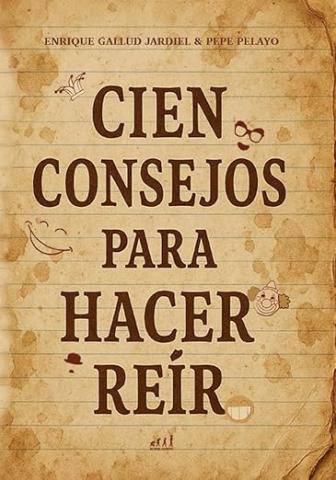
El libro lo encontrará aquí | You will find the book here
By Enrique Gallud Jardiel and Pepe Pelayo
Tip 2: Freedom
Introduction
The authors have modestly pretended... no, that's not true. The authors are not modest at all, but two professional humorists who have been making their readers laugh for many years and who now generously share their comic-making experience with anyone who wants to read these articles in each Humor Sapiens Bulletin, or all compiled in a book.
TIP 2. Freedom
This happens due to the possibility of using absurdity and logical disconnection, apart from other resources that the writer can pull out of their sleeve—or wherever they have them stored (it could be a filing cabinet or a shoebox).
When you write "seriously"... no, that's not correct, because humor is something very serious. When you write something "dramatic," you're always one hair's breadth from ridicule, so you have to be extremely careful about what happens, what the characters say, and what the narrator says. Otherwise, you'll end up with a cheesy dialogue fest. You have to be very precise with the language and know that Uruguayans don't say "¡Ozú!", that's an Andalusian thing. You have to maintain narrative order and clarity so the reader doesn't get confused and think the killer is the building's janitor when it's obvious she inherits nothing according to the will. You have to watch a thousand details, period.
But not in humor. In a comic text, anything can happen, characters can speak however they please, and you don't have to respect any pre-established order. You can make animals talk and have humans think it's perfectly fine. You can even make furniture talk and have the protagonist confide their woes to the wardrobe. You can break the laws of physics and have people fall upward (as the poet Cyrano de Bergerac did in his book about his trip to the moon). You can put the chapters out of order, comment on what you're writing, switch languages midway through the novel, mix real characters with fictional ones, halt the narration to go grab a coffee (and tell the reader so), you can do exactly whatever you feel like: there are no limits.
The worst that can happen is that your innovation isn't funny, but that's it. An original resource almost always is. And if not, no big deal either. There are plenty of supposedly comic texts that don't amuse us at all. That's much better than promising and not delivering, as happens in drama. In her unreadable tome titled Los pazos de Ulloa, the inimitable and mustachioed Countess Emilia Pardo Bazán describes a house servant as the funniest guy, the life of the party, always telling jokes and pulling pranks, someone you couldn't stop laughing with. That's how she describes him. And then, over eight hundred pages, we never see the character say a single funny thing. Is this what we want?
Drama has better press than humor, but it doesn't allow straying from certain parameters. (In this case, the character says nothing funny because there was nothing funny to say in the situations he's in.) Humor doesn't need to respect anything. It's total anarchism in the service of fun.
(This text has been translated into English by ChatGPT)