
[1952-1968]
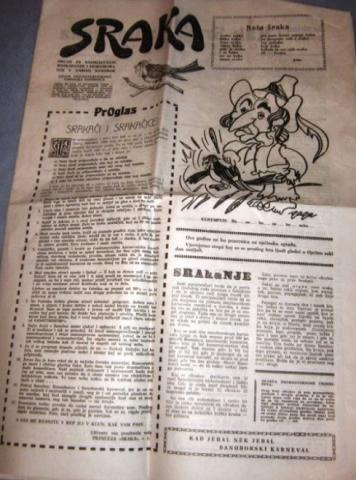
El periódico humorístico-satírico Sraka de Samobor es la revista croata viva más antigua dedicada al humor y la sátira en Croacia. Se publica desde 1904 en un formato de papel de 35-42 cm de altura. Su editor era Eugen Košak y el redactor jefe S. Čaralo. Inicialmente fue un boletín fašnik en el que se ridiculizaban defectos humanos y figuras públicas conocidas. En el subtítulo de los años 1970 decía «inofensivo-picante, carnavalesco-bromista, anual ilustrado».
Ričet (1939- ) con el subtítulo «Ričet de la cocina casera» es uno de los tres boletines fašnik que se publican desde 1939 en el noroeste de Croacia. El primer editor del periódico fue el Consorcio de Deportistas de Samobor y se imprimía en la imprenta de S. Jünkera en Sisak. El redactor responsable era Dragutin Jandračić. La revista estaba ricamente ilustrada y se publicaba en formato de 45 cm. Aún sale hoy en día, una vez al año, como boletín humorístico-satírico electrónico gratuito y, según sea necesario, en edición impresa en tirada limitada. Ambos periódicos fašnik (Sraka y Ričet) siguen publicándose hoy, una vez al año en febrero, por la Filial de Matica hrvatska de Samobor bajo el patrocinio de la Oficina de Turismo de la Ciudad de Samobor. El redactor jefe de ambos boletines es Zoran Perović. Los periódicos se distribuyen antes y durante el evento local con máscaras más conocido llamado «Samoborski fašnik», que dura dos semanas.
Pikač es el tercer boletín fašnik del norte de Croacia, que comenzó a publicarse en 1939 y sigue activo hoy. Se trata de un boletín electrónico e impreso de la Ciudad de Prelog que se publica el 1 de abril por el Día Mundial de la Broma, aunque con largas interrupciones. A lo largo de las décadas, Pikač fue prohibido o no salió porque no había quien lo produjera e imprimiera. Afortunadamente, apareció el caricaturista Ivan Haramija Hans (1946-2014), bajo cuya pluma y dirección editorial el periódico llegó a muchos hogares en 1967 y 1968 antes de volver pronto a un ritmo irregular de publicación. Como editor después de 1990, Pavao Ružman firmó brevemente el periódico. La revista se distribuye gratis a los ciudadanos en una tirada de alrededor de mil ejemplares con motivo del 1 de abril (Día Mundial de la Broma), y el actual redactor jefe es Ivica Beti. El periódico humorístico-satírico está hoy ricamente ilustrado y este año sale su número 28. El del año pasado se realizó íntegramente con inteligencia artificial. Se publica en formato de papel de 42 cm de altura con un total de 28 páginas. En la revista predominan textos humorísticos e irónicos, caricaturas, collages satíricos, anuncios, poemas burlones, anécdotas, con énfasis en ridiculizar a políticos locales y en general a los habitantes de Podravina. En los últimos quince años aproximadamente, Pikač ha incluido textos, chistes y caricaturas de unos cincuenta autores, entre ellos Pajo Kanižaj, Oto Reisinger y Davor Štambuk, que también asistieron a la promoción de Pikač en Prelog. Esta revista publica caricaturistas de toda Croacia, así como artistas del pincel de Rusia, Polonia, Italia, Austria, Macedonia del Norte, República Checa, China, Irán… El periódico sale con apoyo financiero de la Ciudad de Prelog, que como editor financia la preparación e impresión sin interferir en la política editorial.
Sobre la revista humorístico-satírica más conocida Kerempuh (1945-2002), que también se publicó en el período que aborda este artículo, se habló detalladamente en la entrega anterior.
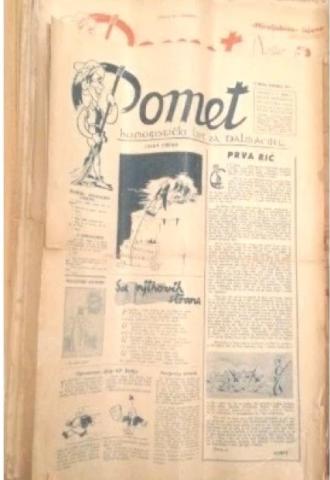
El periódico humorístico Pomet se publicó en el sur de Croacia, en Split, en el período de 1952 a 1956. Su primer editor fue Mirko Peršen, y en el puesto de redactor jefe se sucedieron: Josip Šparac, Ivan Lalić, Miljenko Smoje, Nikola Disopra, Branko Ožegović, Ante Jelaska y Nikica Marinković. Salía semanalmente editado por la Redacción de «Pomet», publicando humor, sátiras, parodias, dibujos graciosos, etc. La revista estaba ilustrada y se publicaba en formato de papel de 46 cm de altura. En cuatro años se publicaron un total de 194 números. El periódico debe su nombre al alegre personaje de las comedias Pomet y Dundo Maroje del importante dramaturgo renacentista croata Marin Držić de Dubrovnik. De los números 1 al 7 salía quincenalmente, del 8 al 133 semanalmente, luego un año del 134 al 147 como mensual, y después de nuevo como semanal hasta el último número. «El 6 de enero de 1952, por primera vez se publicó en el diario Slobodna Dalmacija, en la página final, la cuarta, la columna humorística čakaviana “Ćakule na šentadi” escrita por Balunjeri, entonces el joven de 29 años Miljenko Smoje, conocido escritor y cómico splitense. Las “Ćakule” fueron la semilla de la que brotó en solo dos meses y medio POMET —“periódico humorístico para Dalmacia”—, anunciado en la segunda página del diario el sábado 22 de marzo de 1952 para empezar a salir el domingo 23 de marzo de 1952 como quincenal independiente de 4 grandes páginas, a 10 dinars.» Tras cesar como periódico independiente, se convirtió en suplemento sabatino regular de Slobodna Dalmacija.
(Fuente de la cita: «70 años del difunto periódico humorístico Pomet», Radio Split HRT, Split, 2002, autor del artículo: Mladen Vuković)
El primer número del periódico humorístico Feferon (1964-1992) se publicó el 1 de abril de 1964 en Koprivnica. Era una revista entretenida de la conocida industria alimentaria Podravka. Se publicaba cada tres meses, edición ilustrada en formato de papel de 39 cm. Su redactor jefe era Ivica Čičin-Mašansker y se publicaron un total de 97 números. Con el subtítulo «al servicio de los demás», salió hasta el 1 de abril de 1992, cuando se publicó el último número.
Paradoks (1966-1968), subtitulado «periódico para preguntas serias», se publicó en Zagreb durante tres años completos por el Centro de Actividades Culturales Juveniles. El redactor responsable era Milan Havliček. La revista estaba ilustrada, salía mensualmente en formato de papel de 32 cm de altura.
Dado que Croacia en esa época era una república perteneciente a la formación estatal SFRY (República Federativa Socialista de Yugoslavia), no sorprende que en la entonces república socialista vecina de Serbia se publicaran periódicos y revistas que se leían en las seis repúblicas y dos provincias autónomas, ya que la mayoría se entendía en la lengua oficial serbocroata. Así, en esa época en Serbia salían tres revistas humorístico-satíricas: Vetrenjača, Kekec y Jež.
Vetrenjača (1955-1959) era una revista literaria serbia o yugoslava de humor y sátira de Belgrado que salía bimestralmente en formato de papel de 32 cm de altura, editada por Mile Stanković.
Kekec (1957-1968) era un entretenimiento para jóvenes de 7 a 77 años editado por Borba, bajo la dirección editorial de Novica Đukić en Belgrado. Se trataba de una revista ilustrada impresa en formato de papel de 30-38 cm de altura. Salía todos los jueves en alfabeto latino. A partir del año 11, número 24 (1968), se discontinuó la edición latina y desde entonces solo salía en alfabeto cirílico, fusionándose con los más conocidos Pioniri —revista de entretenimiento para la juventud yugoslava—. Cubría categorías de ciencia, entretenimiento, educación e humor.
Jež (1946-1950) sigue saliendo hoy bajo el nombre Ošišani jež y es la revista serbia de humor y sátira más longeva, que este año celebró su 80 aniversario, con énfasis en la sátira política aguda.

Paradoks
Sraka

Feferon
Pomet
Croatian humoristic magazines (Part 5)
By Dražen Jergović
[1952–1968]
The humoristic-satirical newspaper Sraka from Samobor is the oldest living Croatian magazine for humor and satire in Croatia. It has been published since 1904 on paper sized 35–42 cm in height. Its publisher was Eugen Košak, and the chief editor was S. Čaralo. It was initially a fašnik publication in which human vices and well-known public figures were ridiculed. In the 1970s, its subtitle read “harmless-prickly, carnivalesque-joking illustrated annual.”
Ričet (1939– ) with the subtitle “Ričet from the home stove” is one of three fašnik publications issued since 1939 in Northwest Croatia. The first publisher of the newspaper was the Samobor Sports Consortium, and it was printed at S. Jünker's printing house in Sisak. The responsible editor was Dragutin Jandračić. The magazine was richly illustrated and published on paper sized 45 cm. It still comes out today, once a year, as a free electronic humoristic-satirical newspaper and, as needed, as a printed edition in limited circulation. Both fašnik newspapers (Sraka and Ričet) are still published today, once a year in February, by the Samobor Branch of Matica hrvatska under the sponsorship of the Samobor City Tourist Board. The chief editor of both publications is Zoran Perović. The newspapers are distributed before and during the most famous local masked event called “Samoborski fašnik,” which lasts two weeks.
Pikač is the third fašnik publication from northern Croatia, which began publishing in 1939 and remains active today. It is an electronic and printed gazette of the City of Prelog, published on April 1 for World Joke Day, albeit with long interruptions. Over the decades, Pikač was either banned or did not come out because there was no one to produce and print it. Fortunately, caricaturist Ivan Haramija Hans (1946–2014) appeared, under whose pen and editorship the newspaper showed up in many households in 1967 and 1968 before soon reverting to an irregular publishing rhythm. As editor after 1990, Pavao Ružman briefly signed the newspaper. The magazine is distributed free to citizens in a print run of about a thousand copies on the occasion of April 1 – World Joke Day – and the current chief editor is Ivica Beti. The humoristic-satirical newspaper is today richly illustrated, and this year marks its 28th issue. Last year’s issue was entirely produced using artificial intelligence. It is published on 42 cm high paper totaling 28 pages. The magazine features predominantly humorous and ironic texts, caricatures, satirical collages, advertisements, mocking poems, anecdotes, with an emphasis on ridiculing local politicians and Podravina residents in general. In the last fifteen years or so, Pikač has included texts, jokes, and caricatures by about fifty authors, among them Pajo Kanižaj, Oto Reisinger, and Davor Štambuk, who also attended the Pikač promotion in Prelog. This magazine publishes caricaturists from all over Croatia, as well as brush artists from Russia, Poland, Italy, Austria, North Macedonia, Czech Republic, China, Iran… The newspaper is published with financial support from the City of Prelog, which as the publisher funds the preparation and printing without interfering in the editorial policy.
The most famous humoristic-satirical magazine Kerempuh (1945–2002), which was also published during the period covered in this article, was detailed in the previous installment.
The humoristic newspaper Pomet was published in southern Croatia, in Split, from 1952 to 1956. Its first editor was Mirko Peršen, followed successively by chief editors: Josip Šparac, Ivan Lalić, Miljenko Smoje, Nikola Disopra, Branko Ožegović, Ante Jelaska, and Nikica Marinković. It came out weekly under the editorship of “Pomet,” publishing humor, satires, parodies, funny drawings, etc. The magazine was illustrated and published on paper sized 46 cm in height. In four years, a total of 194 issues were published. The newspaper owes its name to the cheerful character from the comedies Pomet and Dundo Maroje by the significant Croatian Renaissance playwright Marin Držić from Dubrovnik. Issues 1 to 7 came out semi-monthly, issues 8 to 133 weekly, then for one year issues 134 to 147 as a monthly, and afterward again as a weekly until the final issue. “On January 6, 1952, for the first time, the Čakavian humorous column ‘Ćakule na šentadi’ written by Balunjeri, then 29-year-old Miljenko Smoje, the well-known Split writer and comedian, appeared in the daily newspaper Slobodna Dalmacija on the back, fourth page. The ‘Ćakule’ were the seed from which POMET – ‘humoristic newspaper for Dalmatia’ – sprouted just two and a half months later, announced on the second page of the daily on Saturday, March 22, 1952, to start coming out on Sunday, March 23, 1952, as an independent biweekly on 4 large pages, priced at 10 dinars.” After ceasing publication as an independent newspaper, it became a regular Saturday supplement to Slobodna Dalmacija.
(Source of quote: “70 Years of the Late Humoristic Newspaper Pomet,” HRT Radio Split, Split, 2002, article author: Mladen Vuković)
The first issue of the humoristic newspaper Feferon (1964–1992) was published on April 1, 1964, in Koprivnica. It was an entertaining magazine of the well-known food industry Podravka. It was published every three months, an illustrated edition on 39 cm format paper. Its chief editor was Ivica Čičin-Mašansker, and a total of 97 issues were published. Subtitled “at the service of others,” it ran until April 1, 1992, when the final issue came out.
Paradoks (1966–1968), subtitled “newspaper for serious questions,” was published in Zagreb for a full three years by the Center for Youth Cultural Activities. The responsible editor was Milan Havliček. The magazine was illustrated, came out monthly on paper sized 32 cm in height.
Given that Croatia at that time was a republic belonging to the state formation SFRY (Socialist Federal Republic of Yugoslavia), it is no surprise that newspapers and magazines published in the then neighboring socialist republic of Serbia were read across all six republics and two autonomous provinces, as most people communicated in the official Serbo-Croatian language. Thus, at that time, three humoristic-satirical magazines were published in Serbia – Vetrenjača, Kekec, and Jež.
Vetrenjača (1955–1959) was a Serbian or Yugoslav literary review for humor and satire from Belgrade, published bimonthly on paper sized 32 cm in height, edited by Mile Stanković.
Kekec (1957–1968) was an entertainment magazine for youth aged 7 to 77, published by Borba, under the editorial baton of Novica Đukić in Belgrade. It was an illustrated magazine printed on paper sized 30–38 cm in height. It came out every Thursday in Latin script. From year 11, issue 24 (1968), the Latin edition was discontinued, and thereafter it only came out in Cyrillic script, merging with the better-known Pioniri – an entertainment magazine for Yugoslav youth. It covered categories of science, entertainment, education, and humor.
Jež (1946–1950) still comes out today under the name Ošišani jež and is the longest-running Serbian magazine for humor and satire, which this year celebrated its 80th anniversary, with an emphasis on sharp political satire.
(This text has been translated into English by ChatGPT)