
Primera voz
Vivimos tiempos extraños en los que lo cómico ha invadido todos los canales de comunicación, en los que las artes de vanguardia se han transformado en lo burlesco de la recreación estética del pasado, en los que la sociedad no se toma en serio, rechazando al mismo tiempo el humor como estrategia de supervivencia en el pensamiento dialéctico y crítico.
Vivimos tiempos de susceptibilidades, en los que la ironía es peligrosa, ya que la capacidad de lectura es cada vez más reducida en una sociedad embrutecida por la inteligencia artificial, por la noticia rápida y demagógica, en la obsesión de los likes y los influencers. Podemos usarla, pero tenemos que advertir que estamos «jugando», destruyendo de ese modo la belleza del despliegue interpretativo de la palabra y de la imagen.
Irónicamente, nunca hemos visto en la política y en los llamados referentes conductuales de moda, tantas figuras que viven en el ridículo caricaturesco del comportamiento, en actitudes ridículas e hilarantes que, lamentablemente, a veces tienen graves consecuencias en el día a día de los demás, y las masas siguen alegremente detrás de esos flautistas de Hamelin, precipitándose demagógica e irónicamente en el abismo de la anarquía y la imbecilidad.
Siempre se ha dicho que jugando se dicen las cosas serias, al mismo tiempo que los falsos serios afirman que con las cosas serias no se juega. Pero hacer humor no es jugar, es pensar, es meditar, es dialogar con la razón y la sinrazón, creando en el absurdo irónico de la inteligencia nuevas salidas para las preocupaciones, las dudas, las obsesiones. Irónicamente, esto es lo que la sociedad actual ha intentado destruir, apostando esencialmente por el humor blanco, que la mayoría de las veces ni siquiera es humor, sino simple comicidad, simple risa grosera de quien no gusta de pensar, de usar la cabeza para mirar la vida con creatividad.
Irónicamente, diciendo que defienden la libertad de pensamiento, intentan nublarnos esos breves momentos de libertad mental, explotando los sinsentidos vacíos de las tendencias de moda, para enturbiar el sinsentido creativo del humor sano y conspirativo.
Irónicamente, junto a falsos payasos políticos, encontramos otros payasos que, ante el abuso de los desvaríos de aquellos, avanzan hacia el proscenio político intentando, en el absurdo de las campañas electorales demagógicas, hablar en serio sobre lo que la sociedad no quiere oír, ver ni hablar, trayendo a la política la verdadera ironía y jugando contra las ironías de los debates políticos y sociales.
En estos tiempos irónicos de absurdos, necesitamos urgentemente más risas inteligentes, más sonrisas cómplices, más rebeldía irónica contra el embrutecimiento, necesitamos usar la inteligencia para ver más lejos, sometiendo todo a crítica y dialogando con el optimismo.
Lo más importante de todo no es siquiera la sátira, lo burlesco, ni siquiera el humor, sino no dejar morir la ironía, ese juego dialogante esencial de la sociedad.
Osvaldo Macedo de Sousa
Segunda voz
Me encantó la reflexión sobre este tema que realizó mi amgo y colega Osvaldo Macedo de Sousa. Estoy totalmente de acuerdo con él. Sin embargo, tengo una opinión totalmente diferente.
¿Contrasentido?... Aparentemente.
¿Quién tiene razón entonces?...
Trataré de explicarme.
Yo le llamo “cómico” al proceso que experimenta una persona, provocada por una incongruencia y que finaliza en risa o sonrisa. Es un proceso individual. Pero si esa persona, con toda intención, le manda un mensaje a otra (o a muchos), para que esos receptores experimenten sus propios procesos cómicos internos y también al final ríen o sonríen, se hizo el humor. Porque el humor es social y lo cómico personal. Por lo tanto, lo cómico no es humor y lo humorístico siempre contendrá lo cómico. Resumiendo, el humor, para mí, es la expresión de lo cómico.
Mirado de ese modo, todo el que hace humor es humorista. Desde un simple payaso que hace reír a un niño, hasta un excelso literato, dibujante, dramaturgo, cineasta, etc.
Otro punto. En mi criterio, el humor blanco es el humor más “inteligente” que existe. Le llamo humor blanco al que va desde el infantil, hasta el que solo hace reír o sonreír, incluyendo al que hace reír y sonreír, pero además consiguiendo a la vez hacer pensar y sentir al mismo tiempo. No al tendencioso, como decía Freud.
Si el humor hacer pensar, significa que ese humor tiene un % de comicidad algo bajo en el mensaje y alto el de otros elementos que nos provoca pensar. Claro, esa comicidad, como ya mencioné, no puede ser cero, porque entonces no sería humor. Si no produce aunque sea algo de risa, o de sonrisa, o de sonrisa interior (solo sentir el placer sui géneris, pero sin exteriorizar la sonrisa), dejaría de ser humor.
Y conseguir hacer buen humor blanco es muy difícil. Es más difícil que hacer sátira, ironía. No digo humor “inteligente”, porque en mi opinión, lo inteligente lo da el consumidor. Si el público (el consumidor) entiende el mensaje, descifra los códigos del mensaje del artista y siente placer y ríe o sonríe, se siente inteligente. Esa es la sensación que debe buscar un humorista: lograr que el consumidor de su obra se sienta inteligente. Para eso debe elaborar muy bien su obra. Claro, si la elabora mucho, puede que el público no entienda nada y se anuló el proceso humorístico. Y si elaboró muy poco y se entiende demasiado fácil la “gracia”, pierde valor la obra y se hace desechable y en un momento se hará rechazable.
Según mi entender, se hace solo humor bueno y humor malo. Si alguien hace un chiste (en cualquier manifestación artística), bien simplón, o de mal gusto, vulgar, eso es humor malo. Pero es humor. Y si hace humor solo para hacer reír o para hacer reír y pensar con elaboración artística alta, es humor bueno, magnífico, excelente. Ojo, me gusta el humor solo para hacer reír, porque es muy necesario, pero me gusta más cuando además hace pensar o reír.
¿Por qué es más difícil hacer humor blanco? Porque hay que crearlo todo de cero. Para hacer una sátira, una ironía, basta ver algo mal hecho, algo que se necesite criticar; es decir, tienes la base ya de dónde partir. Si deseas hacer humor blanco sobre la ambición humana, por ejemplo, no partes de una base, debes imaginártelo todo.
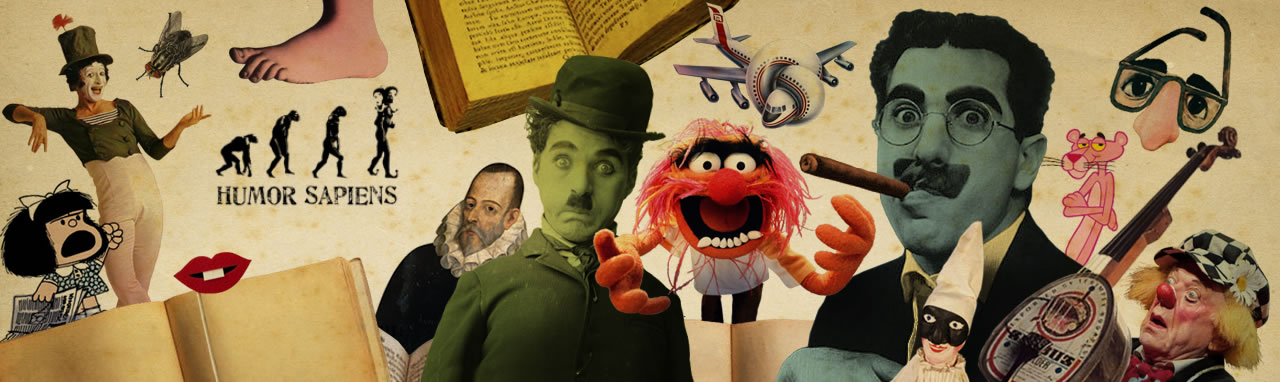
Por otro lado, en esta Teoría Humor Sapiens, el universo de la burla es muy amplio. Existe burla que no es humorística, aunque produzca risa. Y me detengo aquí un segundo: no se puede confundir el estudio de la risa con el estudio del humor. Van por carriles separados, aunque la finalidad del humor es hacer reír (haciendo pensar también o no). Uno ríe por alegría, por alivio, por un triunfo y hasta por nervios y nada de eso es humor, obviamente.
Pero existe un humor que puede ser burla. Por ejemplo, dentro del humor está la sátira, que es una burla con intención crítica de señalar y/o superar algo dañino o mal hecho.
Y dentro del humor está la ironía, que es una burla “camuflada”, porque se expresa algo que significa lo contrario y se necesita complicidad en el receptor (o los receptores), para que se produzca la risa. Se dice que la ironía es la forma más inteligente de hacer humor, precisamente por eso, porque hay que expresar lo contrario y darse cuenta que los consumidores saben de qué se trata y lograr todo eso no fácil si deseas hacerla con alto nivel. Hay que esforzarse mucho para crearla.
Y dentro del humor está la parodia, la caricatura (que es la forma extrema de la parodia), está la broma, el chiste (chiste satírico, o irónico, o paródico, etc., porque el chiste es otra forma muy abierta dentro del humor).
La burla humorística va desde la “sana”, donde la víctima también ríe o sonríe, hasta la virulenta que llega hasta la frontera del humor. Producen risa, sí, pero ya malsana y no necesitan siquiera de elaboración.
Esa burla puede ser muy agresiva, muy cruel, la que los griegos llamaban “sarkasmos” (castellanizada “sarcasmos”), construida con la palabra “sarkos” que significa “carne” (“un sarcasmo puede sacarte a pedazos la carne”. Otro ejemplo de la misma raíz para ilustrar mejor: “sarcófago”). Supongo que de “carne” también venga lo de “escarnio”, que es aún una burla más humillante que el sarcasmo (una burla “descarnada”).
En fin, parece que desde siempre el humor blanco y la burla correctiva, constructiva e inclusiva (la humorística), es lo mejor para el espíritu más que para la carne.
Por eso la risa vacía, “primitiva”, esa risa que abunda en la boca de tontos, como dice esa máxima latina, es para la carne, reitero, no para el espíritu.
Pero si no aceptamos esta convención mía para entender qué es el humor, qué es lo cómico, qué es la sátira, qué es la ironía, etc., no pasa nada.
Llamémosle cómico al humor que no hace pensar y sentir y estamos en el sistema de mi amigo y colega vecino.
Si se fijan, aunque no le denominemos igual a los fenómenos, el resultado es idéntico.
-Porque para mí el humor malo ha inundado la televisión en esto tiempos, como él dice. Aunque él lo llame “cómico”.
-Porque el humor excelente para mí o el humor como estrategia de supervivencia en el pensamiento dialéctico y crítico, para él, es rechazado.
-Porque la ironía, tanto en mi visión como en la de él, es peligrosa, por la ignorancia en aumento, más la tecnología y la estupidez con que se usa esta, etc.
-Porque tanto desde su mirada como desde la mía, la política ha bajado tanto el nivel que desespera ver los políticos ridículos, oportunistas y caricaturescos.
-Porque la risa vacía va solo a la carne y no al espíritu, lo llame él humor blanco y yo algo que no es humor.
-Porque me adhiero 100% a sus palabras (copio y pego aquí): “En estos tiempos irónicos de absurdos, necesitamos urgentemente más risas inteligentes, más sonrisas cómplices, más rebeldía irónica contra el embrutecimiento, necesitamos usar la inteligencia para ver más lejos, sometiendo todo a crítica y dialogando con el optimismo”.
Si el resultado es el mismo por ambos caminos, como acabo de demostrar, es pura convención este supuesto conflicto. Por lo tanto, los dos teníamos razón y no había un real contrasentido, como lo sugerí al inicio para provocar el análisis.
Mi amigo y colega y yo nos entendemos, aunque nos rijamos por definiciones diferentes.
El buen humor une siempre.
Pepe Pelayo

Osvaldo Macedo de Sousa

Pepe Pelayo
The Irony of the Times — Can We Be Irreverent in the Intelligent Wordplay of Critical Thinking?
By: Osvaldo Macedo de Sousa and Pepe Pelayo
First voice
We live in strange times in which the comic has invaded every channel of communication, in which the avant-garde arts have transformed into the burlesque of aesthetic recreation of the past, in which society does not take itself seriously, while at the same time rejecting humor as a survival strategy in dialectical and critical thinking.
We live in times of sensitivities, in which irony is dangerous, since the capacity for reading is increasingly diminished in a society stupefied by artificial intelligence, by fast and demagogic news, by the obsession with likes and influencers. We can use it, but we must warn that we are «playing», thereby destroying the beauty of the interpretative unfolding of word and image.
Ironically, never before have we witnessed in politics and in the so-called behavioral role models of fashion, so many figures who live in the caricaturesque ridiculous of behavior, in ridiculous and hilarious attitudes that, unfortunately, sometimes have serious consequences in the daily lives of others, and the masses cheerfully follow these Pied Pipers of Hamelin, plunging demagogically and ironically into the abyss of anarchy and imbecility.
It has always been said that serious things are spoken in jest, while the falsely serious claim that serious matters are no laughing matter. But making humor is not playing, it is thinking, it is meditating, it is dialoguing with reason and unreason, creating in the ironic absurd of intelligence new ways out of worries, doubts, and obsessions. Ironically, this is precisely what contemporary society has been trying to destroy, betting essentially on bland humor, which most of the time is not even humor at all, but mere comicality, the crude laughter of those who do not enjoy thinking, who do not use their minds to look at life with creativity.
Ironically, claiming to defend freedom of thought, they try to cloud those brief moments of mental freedom, exploiting the empty nonsense of fashionable trends, in order to obscure the creative nonsense of healthy and conspiratorial humor.
Ironically, alongside false political clowns, we find other clowns who, faced with the abuse of the former's excesses, step forward onto the political stage, attempting, in the absurdity of demagogic electoral campaigns, to speak seriously about what society does not want to hear, see, or discuss, bringing true irony into politics and playing against the ironies of political and social debates.
In these ironic times of absurdities, we urgently need more intelligent laughter, more complicit smiles, more ironic revolt against stupefaction; we need to use intelligence to see further ahead, subjecting everything to critical scrutiny and engaging in dialogue with optimism.
Most importantly of all, it is not even satire, burlesque, or humor itself that matters most, but rather not letting irony die — that essential dialoguing game of society.
Osvaldo Macedo de Sousa
Second Voice
I was delighted by the reflection on this topic offered by my friend and colleague Osvaldo Macedo de Sousa. I am in complete agreement with him. However, I hold an entirely different opinion. A contradiction?... Apparently so. Who is right, then?... I will try to explain myself.
I use the term "comic" to refer to the process experienced by a person, triggered by an incongruity, and which ends in laughter or a smile. It is an individual process. But if that person, with full intention, sends a message to another person (or to many), so that those receivers experience their own internal comic processes and also end up laughing or smiling, then humor has been made. Because humor is social and the comic is personal. Therefore, the comic is not humor, and the humorous will always contain the comic. In short, humor, for me, is the expression of the comic.
Seen in that light, anyone who makes humor is a humorist. From a simple clown who makes a child laugh, to an exceptional writer, cartoonist, playwright, filmmaker, and so on.
Another point. In my view, bland humor is the most "intelligent" humor that exists. I call bland humor everything ranging from children's humor to humor that only makes one laugh or smile, including humor that makes one laugh and smile while also prompting thought and feeling at the same time. Not the tendentious kind, as Freud would say.
If humor makes you think, it means that humor has a somewhat low percentage of comicality in its message and a high percentage of other elements that prompt thought. Of course, that comicality, as I already mentioned, cannot be zero, because then it would no longer be humor. If it does not produce at least some laughter, or a smile, or an inner smile (simply feeling that sui generis pleasure without outwardly showing the smile), it would cease to be humor.
And achieving good bland humor is very difficult. It is harder than producing satire or irony. I do not say "intelligent" humor, because in my opinion, intelligence is provided by the consumer. If the audience (the consumer) understands the message, deciphers the codes of the artist's message and feels pleasure and laughs or smiles, they feel intelligent. That is the sensation a humorist must seek: making the consumer of their work feel intelligent. To achieve this, the work must be very carefully crafted. Of course, if it is overly elaborate, the audience may not understand anything and the humorous process is frustrated. And if it is too simple and the "joke" is understood too easily, the work loses value, becomes disposable, and will eventually become rejectable.
As I see it, there is only good humor and bad humor. If someone tells a joke (in any artistic form) that is overly simplistic, in poor taste, or vulgar, that is bad humor. But it is still humor. And if someone creates humor solely to provoke laughter, or to provoke laughter and thought with high artistic craftsmanship, that is good, magnificent, excellent humor. Mind you, I appreciate humor that exists purely to make people laugh, because it is very necessary, but I appreciate it even more when it also prompts thought or further laughter.
Why is bland humor harder to create? Because everything must be built from scratch. To produce satire or irony, it is enough to observe something poorly done, something that needs to be criticized — in other words, you already have a starting point. If you want to create bland humor about human ambition, for example, you have no starting point; you must imagine everything.
On another note, within this Humor Sapiens Theory, the universe of mockery is very broad. There is mockery that is not humorous, even though it produces laughter. And I pause here for a moment: the study of laughter must not be confused with the study of humor. They run on separate tracks, even though the purpose of humor is to make people laugh (whether or not it also prompts thought). One laughs out of joy, relief, triumph, or even nerves, and none of that is humor, obviously.
But there is a humor that can be mockery. For example, within humor there is satire, which is mockery with the critical intention of pointing out and/or overcoming something harmful or poorly done.
And within humor there is irony, which is "camouflaged" mockery, because something is expressed that means the opposite, and complicity is required from the receiver (or receivers) for laughter to occur. It is said that irony is the most intelligent form of humor, precisely because of this — because one must express the opposite and trust that consumers know what it is about — and achieving all of that is not easy if you wish to create good irony. A great deal of effort must go into crafting it.
And within humor there is parody, caricature (which is the extreme form of parody), the prank, and the joke (satirical joke, ironic joke, parodic joke, and so on, because the joke is another very open form within humor).
Humorous mockery ranges from the "wholesome" kind, where the victim also laughs or smiles, to the virulent kind that reaches the very frontier of humor. They do produce laughter, yes, but of an unwholesome sort, and they do not even require craftsmanship.
Such mockery can be very aggressive, very cruel — what the Greeks called "sarkasmos" (rendered in Spanish as "sarcasmo"), built from the word "sarkos," meaning "flesh" ("a sarcasm can tear the flesh from you piece by piece." Another example from the same root to illustrate further: "sarcophagus"). I suppose that from "flesh" also comes the word "escarnio" (scorn), which is an even more humiliating form of mockery than sarcasm (a "fleshless" mockery).
In short, it seems that wholesome humor and corrective, constructive, and inclusive mockery (the humorous kind) have always been better for the spirit than for the flesh.
That is why empty, "primitive" laughter — the laughter that, as that Latin maxim says, abounds in the mouths of fools — is for the flesh, I reiterate, not for the spirit.
But if we do not accept this convention of mine for understanding what humor is, what the comic is, what satire is, what irony is, and so on, that is perfectly fine.
Let us call comic whatever humor does not make us think and feel, and we are operating within the system of my friend and neighboring colleague.
If you look closely, even if we do not name the phenomena the same way, the result is identical.
√ Because for me, bad humor has flooded television in these times, just as he says. Even though he calls it "comic."
√ Because what I call excellent humor, or what he calls humor as a survival strategy in dialectical and critical thinking, is rejected by society.
√ Because irony, both in my view and in his, is dangerous, due to growing ignorance, compounded by technology and the stupidity with which it is used, and so on.
√ Because both from his perspective and from mine, politics has sunk so low that it is disheartening to witness these ridiculous, opportunistic, and caricaturesque politicians.
√ Because empty laughter reaches only the flesh and not the spirit, whether he calls it bland humor or I call it something that is not humor at all.
√ Because I adhere 100% to his words (I copy and paste them here): "In these ironic times of absurdities, we urgently need more intelligent laughter, more complicit smiles, more ironic revolt against stupefaction; we need to use intelligence to see further ahead, subjecting everything to critical scrutiny and engaging in dialogue with optimism."
If the result is the same along both paths, as I have just demonstrated, this supposed conflict is purely a matter of convention. Therefore, we were both right, and there was no real contradiction, as I suggested at the outset in order to provoke analysis.
My friend and colleague and I understand each other perfectly, even though we operate according to different definitions.
Good humor always brings people together.
Pepe Pelayo
(This text has been translated into English by ChatGPT)