
Galicia, en el noroeste de la península ibérica, es una región española con una fuerte personalidad cultural e histórica y una unidad administrativa que se remonta a la época de los romanos. Estos la convirtieron, durante el Imperio, en una de sus provincias hispánicas. Después, los suevos implantaron en ella el primer reino independiente de Europa occidental. Luego, durante la Edad Media, constituyó un pujante reino medieval, que mantuvo su existencia nominal hasta 1833, cuando entró en vigor en España la actual división administrativa en provincias. En la actualidad, es una comunidad autónoma con autogobierno y una lengua propia cooficial, el gallego.
Esta Galicia con tanta personalidad ha sido siempre una potencia en lo que a la caricatura y el dibujo de humor se refiere, aunque ni los propios gallegos hayan sido muchas veces conscientes de ello. La endémica emigración gallega hizo que el padre de la caricatura política argentina –a finales del siglo XIX y comienzos del XX– fuese un hijo de esta tierra: José María Cao Luaces, que se fogueó en Don Quijote y acabó dando lo mejor de sí mismo en Caras y Caretas, semanarios los dos de Buenos Aires. Pero Cao no fue el único humorista gráfico gallego que hizo las Américas. En realidad, la escuela argentina de la caricatura fue obra, en buena medida, de naturales de Galicia: a Cao hay que sumar los nombres de Juan Carlos Alonso Pita, Federico Rivas Montenegro, Ramón Peña Gil, Manuel Fernández Lourido y Ramón de Castro Rivera.
Si José María Cao emigró a Buenos Aires y fundó allí la caricatura política argentina, Alfonso Daniel Rodríguez Castelao –quien de niño había vivido en el país austral y tras la guerra civil española se volvió a instalar allí en calidad de exiliado– fue el creador del moderno humor gráfico gallego. Pero Castelao supone mucho más que eso: sin duda, fue uno de los mejores dibujantes internacionales de humor de su tiempo y de todos los tiempos. Además, fundó una escuela en Galicia en la que muchos otros humoristas alcanzaron la excelencia, como Carlos Maside García, Álvaro Cebreiro Martínez y Manuel Torres Martínez.
La guerra civil acabó con todo esto, pero a partir de los años 60 del pasado siglo fueron apareciendo tímidamente algunas nuevas grandes figuras del humorismo gallego: Fernando Quesada Porto, Siro López Lorenzo, Xaquín Marín Formoso, Xosé Lois González Vázquez (Xosé Lois), José Ángel Rodríguez López (Gogue), Xosé Carreiro Montero (Pepe Carreiro), David Pintor y Carlos López (Pinto & Chinto), Luís Davila Malvido, Francisco Xabier da Silva Irago (Kiko da Silva).
Hace unos pocos años tuve el inmenso placer de elaborar una tesis doctoral sobre Xaquín Marín, en la que concluyo que se trata del humorista gráfico gallego más importante desde Castelao. Pero, sin duda, hay otra figura determinante en Galicia en el dibujo de humor, y especialmente en la caricatura, en los últimos cincuenta años. Hablo de Siro López, al que en los últimos tiempos le han llegado, por fin, algunos de grandes reconocimientos que merece. Me refiero, en particular, a los premios –en mayo de 2023– EMHU Fugas, del III Encuentro Mundial de Humorismo de La Coruña, y Piedra del Destino, de Amigos de los Museos; y, especialmente, a la dedicatoria del Día de la Ilustración de Galicia 2026, celebrado el pasado 30 de enero (aniversario del nacimiento de Castelao) con el impulso del Gobierno autonómico gallego y la Asociación Gallega de Profesionales de la Ilustración (AGPI).
Además, últimamente ha protagonizado dos exposiciones señeras: la primera, Siro: 81 anos e un lapis, en La Coruña, una muestra antológica de su trabajo como dibujante y pintor en los últimos 55 años, y la segunda, 40 anos de autonomía de Galicia nas caricaturas de Siro, itinerante por varias ciudades gallegas, formada por cientos de viñetas para el diario coruñés La Voz de Galicia realizadas desde 1985.
En realidad, estos actos de reconocimiento empezaron en 2017, con la edición de un lujoso volumen formato álbum de casi 400 páginas sobre toda su obra gráfica –pintura, dibujo, dibujo de humor y caricatura– por parte de la Diputación Provincial de La Coruña.
Siro –así, a secas, sin apellido ninguno, como firma sus caricaturas y dibujos de humor– comenzó a publicar viñetas en 1970 y se jubiló como miembro de la redacción de La Voz de Galicia en 2006 para dedicarse de lleno a la pintura y la literatura. Aun así, ha continuado colaborando periódicamente hasta hoy en el diario coruñés que le dio la oportunidad en 1985 de vivir profesionalmente de la caricatura y del periodismo.
¿Por qué es tan relevante Siro en el mundo del humor en Galicia y más allá? Por varias y muy poderosas razones. Veámoslas.
El padre de la caricatura política gallega
La primera, porque es el padre de la caricatura política gallega después de la guerra civil. Tras estrenarse en el dibujo de humor en 1970 en la revista gallega Chan, que se editaba en Madrid, Siro recuperó en 1971 en Ferrol Diario la tradición de la caricatura política gallega, quebrada por el franquismo, tradición que continuó luego en El Norte de Galicia –también de Ferrol–, La Región de Ourense y El Ideal Gallego de La Coruña, antes de realizar para La Voz de Galicia a partir de 1985 –cuando dejó su trabajo como delineante en un astillero ferrolano para dedicarse de lleno a la prensa– un trabajo sin parangón en toda la prensa española: contar el día a día de la actualidad política gallega a través de la caricatura política.
En La Voz de Galicia Siro hizo un trabajo probablemente único dentro del humor gráfico en la prensa diaria española: durante más de veinte años publicó una viñeta diaria comentando, a través de la caricatura, la noticia principal de la actualidad política y parlamentaria de Galicia. La viñeta acompañaba la noticia en lugar de una fotografía. El dibujante ilustró y comentó la historia de la Autonomía gallega desde los inicios de esta, en 1981, hasta 2006, cuando se jubiló en el periódico. Nadie, salvo, quizás, José María Pérez, Peridis, en El País, pero de otra manera, ha llevado a cabo una labor similar en la prensa española en ese tiempo. Una selección de todo este trabajo quedó recogida en el libro A autonomía galega nas caricaturas de Siro, publicado en 2009 por la Diputación de La Coruña y también en la exposición 40 anos de autonomía de Galicia nas caricaturas de Siro, mencionada anteriormente.
Las viñetas de Siro funcionaban como auténticos editoriales del periódico, igual que las de Antonio Mingote en el ABC de Madrid o las del citado Peridis en El País, también de la capital de España. El propio humorista hablaba así de su labor en el libro A autonomía galega nas caricaturas de Siro: “Creo que la misión del humorista, amparándose en la bula que le concede la risa, no es ir detrás de la noticia, ni la de ilustrar la noticia, sino ahondar en la noticia y, si es posible, ir más allá de la noticia. Sintetizar en una caricatura dibujada, hablada o escrita lo que sería un ‘artículo de fondo’ imposible”.
Por su ausencia total de sectarismo, su trabajo fue apreciado por la mayor parte de los políticos que protagonizaron sus viñetas. Manuel Fraga, presidente del Gobierno gallego entre 1990 y 2005, que había empezado en Londres, durante su etapa como embajador español del Gobierno del dictador Francisco Franco, a coleccionar las caricaturas que protagonizaba, enriqueció su colección con una veintena de las de Siro, que pidió expresamente al periódico y llenaban dos paredes de su despacho oficial. Nadie se sentía vejado, ni siquiera agraviado, sino, muy al contrario, siempre honrado por merecer la atención de Siro. Constituía un privilegio. Podría decirse que uno no era nadie en la política gallega hasta que no salía en una caricatura del humorista, como le dijo una vez Xosé Cuíña, entonces consejero de Política Territorial, Obras Públicas y Vivienda de la Xunta de Galicia y hombre fuerte del Gobierno de Manuel Fraga, a Manuel Abeledo, recién nombrado presidente de la Diputación de La Coruña.
El mayor teórico gallego del humor
La segunda razón de la relevancia de Siro es su brillante trabajo como investigador y teórico del humor, en paralelo a su labor como humorista y periodista. Siro es, sin duda, el mayor teórico del humor que existe actualmente en Galicia, mérito que se acrecienta enormemente si consideramos que su formación es autodidacta, pues nunca estudió en la Universidad. Su labor se ha centrado fundamentalmente en la caricatura, el humorismo –para diferenciarlo de la comicidad y la sátira–, Castelao –tanto en su vertiente gráfica como literaria– y El Quijote, considerada la primera novela humorística de la historia. En cuanto a su teoría de la caricatura, Siro defiende la síntesis expresiva, tal y como la entendía Castelao: se trata apresar las principales características físicas y aun psicológicas del modelo y expresarlas con el menor número posible de trazos. Unas características que él encuentra, especialmente, en los ojos y la boca del modelo.
Recuperando la ética y la estética gallega
El tercer motivo por el que debemos exaltar a Siro es por su insistencia en recuperar la ética y la estética gallegas del dibujo de humor. Para él, el humorista gallego no solo debe escribir en gallego, sino también “dibujar en gallego”. El estilo de Siro se inscribe en lo que él mismo llama “la escuela humorístico-gráfica gallega”, iniciada, como ya se apuntó, por Castelao, y continuada brillantemente por otros como Maside, Torres o Cebreiro. No se trata de copiarlos ni de hacer lo que hacían ellos, sino de participar de un mismo espíritu, basado, fundamentalmente, en la síntesis expresiva y una mirada humorística llena de crítica y solidaridad al mismo tiempo.
Además –y esta es la cuarta gran razón de su extraordinaria relevancia–, Siro ha sido uno de los principales dinamizadores del humor en Galicia en las últimas décadas y artífices de su proyección sobre toda la sociedad. En este campo, su labor es también enorme. Sintetizando, podemos destacar dos grandes hitos. El primero, su contribución a la creación en 1984 del Museo del Humor de Fene, llamado hoy Museo Xaquín Marín, por la decisiva intervención de este otro gran humorista, compañero y amigo entrañable de Siro desde hace más de cincuenta años. Fue el primer museo de humor de toda la península ibérica y, a pesar de su relativa humildad, aún sigue siendo el más importante. El segundo hito es el diseño de la Plaza del Humor de La Coruña, inaugurada en junio de 1990 y reinagurada –después de su remodelación– en febrero de 2023. Es un recinto urbano que pretende homenajear a los grandes humoristas del mundo, desde Galicia y en gallego. Reúne sendas esculturas sedentes, sobre bancos de granito, de Castelao y del escritor lucense Álvaro Cunqueiro; los bustos, sobre pedestales de granito, de otros importantes escritores humoristas de Galicia como Vicente Risco, Wenceslao Fernández Flórez y Julio Camba; y los dibujos en el suelo de mármol de grandes humoristas gráficos y literarios de todos los tiempos y todas las nacionalidades, al lado de inolvidables cómicos del cine y de personajes de cómic.
Sin duda, Siro López Lorenzo es uno de los más grandes caricaturistas y dibujantes de humor que ha dado Galicia y España en los últimos 55 años. Pero no solo eso, pues nunca se quedó en los límites de la caricatura y el dibujo de humor, sino que un artista total y un intelectual de primer orden. Caricaturista, humorista gráfico, dibujante, pintor, periodista, investigador, escritor... Ah, y a pesar de todo –o precisamente por eso, por ser un grande–, profundamente humilde. Un privilegio para Galicia.


Siro, master of humour and caricature
By Félix Caballero
Galicia, in the northwest of the Iberian Peninsula, is a Spanish region with a strong cultural and historical identity and an administrative unity that dates back to Roman times. The Romans turned it, during the Empire, into one of their Hispanic provinces. Later, the Suebi established in it the first independent kingdom in Western Europe. Then, in the Middle Ages, it became a powerful medieval kingdom, which maintained its nominal existence until 1833, when Spain adopted the present provincial administrative division. Today, it is an autonomous community with self‑government and its own co‑official language, Galician.
Galicia, with such a strong identity, has always been a powerhouse in the field of caricature and humorous drawing, even if Galicians themselves have not often been fully aware of this. Galicia’s endemic emigration meant that the father of Argentine political caricature—towards the end of the nineteenth century and the beginning of the twentieth—was a son of this land: José María Cao Luaces, who cut his teeth at Don Quijote and later gave his best work to Caras y Caretas, both Buenos Aires weeklies. But Cao was not the only Galician graphic humourist to reach the Americas. In fact, the Argentine school of caricature was, to a large extent, the work of natives of Galicia: to Cao one must add the names of Juan Carlos Alonso Pita, Federico Rivas Montenegro, Ramón Peña Gil, Manuel Fernández Lourido and Ramón de Castro Rivera.
If José María Cao emigrated to Buenos Aires and founded political caricature there, Alfonso Daniel Rodríguez Castelao—who had spent part of his childhood in that southern country and, after the Spanish Civil War, returned there as an exile—was the creator of modern Galician graphic humour. But Castelao represents much more than that: without doubt he was one of the finest international humorous draftsmen of his time, and indeed of all time. Moreover, he founded a school in Galicia in which many other humourists reached excellence, such as Carlos Maside García, Álvaro Cebreiro Martínez and Manuel Torres Martínez.
The Civil War put an end to all this, but from the 1960s onwards a few new major figures of Galician humour timidly appeared: Fernando Quesada Porto, Siro López Lorenzo, Xaquín Marín Formoso, Xosé Lois González Vázquez (Xosé Lois), José Ángel Rodríguez López (Gogue), Xosé Carreiro Montero (Pepe Carreiro), David Pintor and Carlos López (Pinto & Chinto), Luís Davila Malvido, Francisco Xabier da Silva Irago (Kiko da Silva).
Some years ago I had the immense pleasure of writing a doctoral thesis on Xaquín Marín, in which I conclude that he is the most important Galician graphic humourist since Castelao. But there is undoubtedly another decisive figure in Galicia in humour drawing, and especially in caricature, over the last fifty years. I am referring to Siro López, to whom, in recent times, some of the major recognitions he deserves have finally arrived. I mean, in particular, the EMHU Fugas award in May 2023, from the Third World Encounter on Humour in La Coruña; the Piedra del Destino award from Amigos de los Museos; and especially the dedication of Illustration Day in Galicia 2026, celebrated on 30 January (the anniversary of Castelao’s birth), promoted by the Galician regional government and the Galician Association of Illustration Professionals (AGPI).
Furthermore, he has recently been the central figure in two landmark exhibitions: the first, Siro: 81 anos e un lapis, in La Coruña, an anthology of his work as a draughtsman and painter over the last fifty‑five years; the second, 40 anos de autonomía de Galicia nas caricaturas de Siro, an itinerant show through several Galician cities, composed of hundreds of strips drawn for the Coruña newspaper La Voz de Galicia since 1985. These acts of recognition actually began in 2017, when the Provincial Council of La Coruña published a lavish album‑format volume of nearly 400 pages showcasing his entire graphic output—painting, drawing, humour drawing and caricature.
Siro—the name alone, surname‑free, as he signs his caricatures and humorous drawings—began publishing strips in 1970 and retired from the editorial staff of La Voz de Galicia in 2006 in order to devote himself fully to painting and literature. Even so, he has continued collaborating periodically with the Coruña newspaper, which in 1985 gave him the chance to make a living professionally from caricature and journalism.
Why is Siro so relevant in the world of humour in Galicia and beyond? For several very powerful reasons. Let us look at them.
The father of Galician political caricature
The first reason is that he is the father of Galician political caricature after the Civil War. After débuting in humorous drawing in 1970 in the Galician magazine Chan, published in Madrid, Siro revived in 1971 in Ferrol Diario the tradition of Galician political caricature, ruptured by Francoism. He continued this tradition later in El Norte de Galicia (also from Ferrol), La Región de Ourense and El Ideal Gallego (La Coruña), before undertaking for La Voz de Galicia—from 1985, when he left his job as a draughtsman in a Ferrol shipyard to devote himself fully to the press—work unparalleled in the whole of the Spanish press: telling, through caricature, the everyday life of Galicia’s political reality.
In La Voz de Galicia Siro carried out a body of work probably unique in Spanish‑language daily press graphic humour: for more than twenty years he published a daily strip commenting, through caricature, on the main news item of Galician politics and parliamentary life. The strip accompanied the news item instead of a photograph. The artist illustrated and commented on the history of Galician autonomy from its very beginnings in 1981 until 2006, when he retired from the newspaper. No one else—not even, perhaps, José María Pérez (Peridis) in El País, and in a different way—has carried out such a consistent task in the Spanish press during that period. A selection of this whole body of work is collected in the book A autonomía galega nas caricaturas de Siro, published in 2009 by the La Coruña Provincial Council, and also in the exhibition mentioned above, 40 anos de autonomía de Galicia nas caricaturas de Siro.
Siro’s strips functioned as genuine editorials for the newspaper, much like the cartoons of Antonio Mingote in ABC (Madrid) or those of the aforementioned Peridis in El País, also from the Spanish capital. In the book A autonomía galega nas caricaturas de Siro, the humourist himself speaks of his work as follows: “I believe that the mission of the humourist, sheltering himself under the ‘bulla’ that laughter grants him, is not to run after the news, nor to illustrate the news, but to delve into the news and, whenever possible, to go beyond it. To condense in a drawn, spoken or written caricature what would be an impossible ‘leading article’.”
Because of his complete absence of partisanship, his work was appreciated by most of the politicians who appeared in his strips. Manuel Fraga, president of the Galician government between 1990 and 2005, who had begun collecting the caricatures in which he appeared while serving as Spanish ambassador in London during the dictatorship of Francisco Franco, enriched his collection with some twenty strips by Siro, which he expressly requested from the newspaper and which covered two walls of his official office. No one felt insulted, not even slighted; on the contrary, all felt honoured to garner Siro’s attention. It was a privilege. It could be said that in Galician politics one was nobody until one appeared in one of the humourist’s caricatures, as Xosé Cuíña, then minister for Territorial Policy, Public Works and Housing in the Galician government and a key figure in Manuel Fraga’s administration, once told Manuel Abeledo, recently appointed president of the Provincial Council of La Coruña.
Galicia’s foremost humour theorist
The second reason for Siro’s relevance is his brilliant work as a researcher and theorist of humour, alongside his activity as a humourist and journalist. Siro is, without a doubt, the foremost humour theorist currently active in Galicia, a distinction all the more remarkable given that his training is entirely self‑taught and he never attended university. His work has focused fundamentally on caricature, humourism—for him different from mere comicness and satire—Castelao (both in his graphic and his literary facets), and Don Quixote, regarded as the first humorous novel in history. Regarding his theory of caricature, Siro champions expressive synthesis, as Castelao understood it: capturing the chief physical and even psychological traits of the model and expressing them with the fewest possible strokes. These traits, he finds especially in the model’s eyes and mouth.
Recovering Galician ethics and aesthetics
The third reason why we must exalt Siro is his insistence on recovering the ethical and aesthetic foundations of Galician humorous drawing. For him, the Galician humourist must not only write in Galician, but also “draw in Galician.” Siro’s style belongs to what he himself calls the “Galician humorous‑graphic school,” begun, as already noted, by Castelao and brilliantly continued by others such as Maside, Torres and Cebreiro. It is not about copying them or reproducing what they did, but about sharing a single spirit, grounded above all in expressive synthesis and a humorous gaze filled with criticism and solidarity at the same time.
Furthermore—and this is the fourth great reason for his extraordinary relevance—Siro has been one of the main driving forces of humour in Galicia over recent decades, and one of the key architects of its projection into society at large. In this field his work is also immense. In summary, two major milestones stand out. The first is his contribution to the founding, in 1984, of the Humour Museum in Fene, now known as the Xaquín Marín Museum, owing to the decisive involvement of that other great humourist, Siro’s close colleague and friend for over fifty years. It was the first museum of humour on the entire Iberian Peninsula and, despite its relative modesty, it remains the most important to this day.
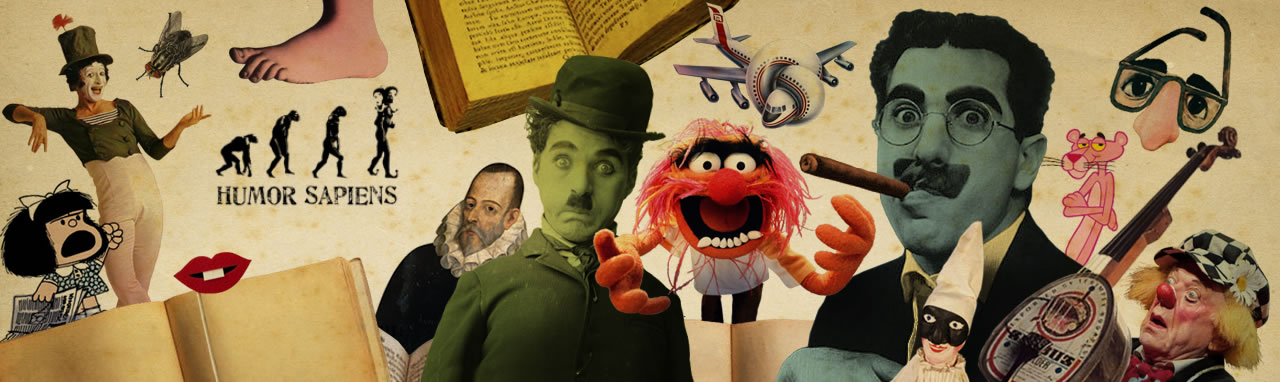
The second milestone is his design of the Plaza del Humor (Humour Square) in La Coruña, inaugurated in June 1990 and reopened in February 2023 after refurbishment. This urban space is intended to honour the great humourists of the world, from Galicia and in the Galician language. It brings together seated sculptures of Castelao and the Lucense writer Álvaro Cunqueiro, placed on granite benches; busts on granite pedestals of other important Galician humourist writers such as Vicente Risco, Wenceslao Fernández Flórez and Julio Camba; and drawings etched into marble paving of major graphic and literary humourists from all periods and nationalities, alongside unforgettable comic actors from cinema and characters from comic strips.
Without a doubt, Siro López Lorenzo is one of the greatest caricaturists and humourist draftsmen Galicia and Spain have produced in the last fifty‑five years. But he is not only that, because he has never confined himself to the limits of caricature and humorous drawing; he is a complete artist and a major intellectual: caricaturist, graphic humourist, draughtsman, painter, journalist, researcher, writer… And, despite everything—or precisely because he is a giant—deeply humble. A privilege for Galicia.
(This text has been translated into English by Chat GPT)