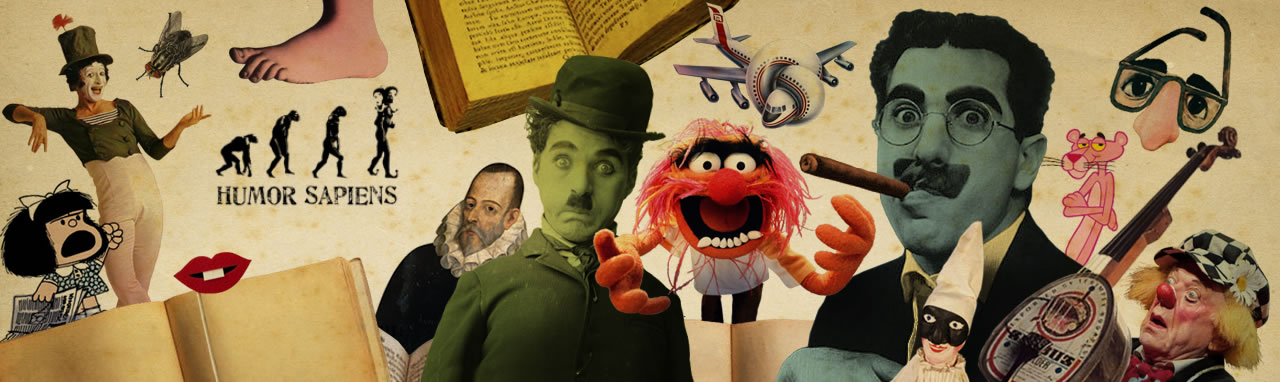
Iván Izquierdo escribe “el arte de olvidar” para hablar sobre la relación entre la mente y el cuerpo, especialmente en los desarrollos cerebrales que permiten escoger recuerdos y guardarlos. Entre todos sus comentarios, prefiero el que no hizo: el de la memoria y el humor. Quizás por no recordar haber leído cómo olvidar lo que más me gusta, quizás porque yo soy mi fuente misma de humor. Hasta la fecha no me he olvidado de mí mismo.
El tiempo hace menos eficiente el cuerpo humano, y en un proceso paralelo también la mente. En algunas personas la memoria subsiste en forma desigual a lo largo de la vida, ya sea de manera consciente o inconsciente, y al llegar a cierta edad podemos retomar las propias vivencias con la mirada de la experiencia, a veces de manera involuntaria. Los hechos se pueden dividir, cual causa y efecto, en lo que sucedió y lo que nos hizo sentir. El humor también se puede fragmentar entre causa y efecto. Puede que no recuerde con precisión la situación que me hizo reír, pero si recordaré que pasé un momento divertido; y probablemente también recuerde el efecto que causó en otros. El humor puede ser dividido tanto por niveles de su implantación en la memoria, como por los efectos colaterales generados: recordaré que contaba un chiste relacionado con un tema simplón (supongamos sobre la caída de quienes se amarran mal los zapatos), pero me parecerán más importantes las caras de diversión de quienes lo escucharon y dentro de estos habrá alguno que además de reír gesticuló con asombro. Así, no sólo recordaré haber vivido un momento divertido, también recordaré lo ingenioso que me sentí al sorprender a mis escuchas. Quizás otros sentimientos logren un efecto similar, pero el humor se distingue porque alguna de sus facetas puede ser inolvidable, siempre y cuando la persona sea proclive al humor y el chiste en cuestión sea de su agrado. En la era de la corrección política, lo que antes era motivo de carcajadas hoy puede ser causa de una agresión. Este es otro recuerdo que hoy puede ser confuso. No se trata sólo del chiste mismo, también hay que comprender por qué me daba risa antes. Entonces, el humor en el recuerdo tiene otro componente: el de su condición social, pero siempre aterrizado a la propia historia. De niño me reía de los viejos y sus achaques, pero sólo si estábamos únicamente niños. Cualquier adulto nos hubiera reprendido. Al establecer que esos chistes ya no puedo ni contarlos con mis contemporáneos porque alguno puede comentar su incorrección política, añado otro factor al recuerdo personal: el de la autocensura.
La pérdida de recuerdos puede darse de varias formas. En la extinción y la represión las memorias no se pierden, pero son menos accesibles. En el bloqueo y en el olvido hay una verdadera merma de información. El olvido humano no es voluntario generalmente, para sobrevivir buscamos escoger las memorias. Lo trágico y fascinante de los propios recuerdos es que en parte dependen de la voluntad y en parte de reacciones químicas cerebrales que nada tienen que ver con el deseo humano. Los neurólogos tienen identificados los campos cerebrales en donde se guardan determinados recuerdos, las partes del cerebro que intervienen para definir nuestra memoria y los mecanismos que para ello se requieren a nivel celular. El humor, además, requiere una proyección en el rostro y el cuerpo. Por lo menos, recordaré haber sonreído o carcajeado tanto que necesariamente tuve que doblar el cuerpo (y a veces ese será el recuerdo: que me dio un calambre en los músculos estomacales de tanto reírme; o que me dolió la cabeza; o que no pude contener la salida del contenido líquido o solido por la fuerza de esa risa; o que perdí el aliento por la salida del aire pulmonar, etc.). Y si alguien también se reía de algún modo extraño o irregular, eso será parte del recuerdo. Ya no es sólo el recuerdo de mi cuerpo, interiorizo el contexto y haberme topado con una persona de risa extraña. En algunos lugares se hacen concursos sobre la risa más insólita; y tiene la peculiaridad de que también llama a la risa del espectador. Entre los factores del humor, la sorpresa es uno innegable. Así, la risa, su vehículo o su expresión más sencilla, es una fuente en sí misma de humor.
Cada estado emocional va acompañado de una avalancha hormonal y neuro hormonal. Los griegos antiguos, en su sabiduría metafórica, hablaban de tipos de personas a partir de sus humores, referidos estos a los fluidos corporales. Se liberan ciertas sustancias que modulan la actividad nerviosa del cerebro. Y esto sucede involuntariamente. Los avances médicos que han identificado esas sustancias tienen claro que algunas actividades o alimentos también las liberan, y esto explica los excesos alimentarios y la proliferación de actividades de alto riesgo. Los aspectos emocionales se insertan de mayor forma en las memorias. A nivel neuronal, es 100% real el dicho “recordar es vivir”. Un recuerdo profundo placentero o de enojo logra liberar las mismas sustancias neuronales, quizás en porcentajes menores, que la vivencia misma.
La memoria corporal también se puede encontrar en áreas sin neuronas. El cuerpo retiene impactos emocionales asociados a golpes o tocamientos. Fisiológicamente, parte del estómago tiene la capacidad de recordar. Anatómicamente el cerebro humano está diseñado para olvidar, las neuronas se agotan y/o mueren. La mente humana se modifica en momentos del desarrollo, como sucede cuando el niño cambia de gatear a pararse. Las funciones corporales y cerebrales se modifican para ajustarse al desplazamiento en dos extremidades y ya no en cuatro. En esta etapa es muy claro cómo se pierden células cerebrales, pues la información neuronal para gatear ya es inútil. Como los niños que ríen desde la cuna tienen más neuronas desarrolladas (si bien la risa es uno de los primeros mecanismos de sociabilización -o comunicación- pues el niño se ríe CON otro) es probable que tengan esos recuerdos enquistados en formas inconscientes. Los adultos no recordarán cómo o de qué se reían de bebés o niños, pero se sabrán provenientes de una infancia feliz. El humor es un aroma que nunca se pierde; lo que se disipa es la capacidad de olerlo de nuevo, a menos que uno insista en ejercitar el sentido del olfato por encima de los otros. Realmente se olvida por falta de uso neuronal o por la desaparición de las células nerviosas y/o de sus sinapsis. En otras etapas del crecimiento, para impedir el olvido sólo queda practicar reiteradamente la memoria. Leer es la mejor actividad cerebral, dicen unos. Pero sería mejor leer sobre humor, especialmente sobre textos que en otra edad me divirtieron. Entonces estaré recordando con todos los mecanismos involucrados en la memoria, pero con la sensación de diversión, de bienestar, que ello me traerá de regreso. Ya lo dije, recordaré la causa y los efectos, con la peculiaridad de que estos pueden ser mucho más que los esperables y entonces ese humor se extenderá en el tiempo por sus efectos.
La pérdida de memoria individual puede extrapolarse socialmente. Las campañas mediáticas contemporáneas no son novedad. Los gobiernos que insisten en dar un discurso falso para manejar a una población incapaz de recordar incluso lo más trágico no es novedoso. La primera guerra mundial dejó a un pueblo alemán resentido y una vez acabada la guerra se esforzó en recuperarse económica y espiritualmente, pero Hitler logró que esos alemanes olvidaran el alto grado de civilización que habían alcanzado para 1930. En lugar de aprovechar el pensamiento moderno para evolucionar y adelantar el crecimiento industrial y social, Hitler realizó una campaña para que esos alemanes vanguardistas decidieran volver a la ética y las costumbres de dos milenios antes, cuando la violencia iba por delante de un pensamiento progresista. El racismo y la división social eran parte central del control social: el odio es buen motor para la destrucción. Logrado el objetivo, la brutalidad de Hitler contra quienes eran disidentes llevó a la muerte de millones de personas, con un nivel de salvajismo que jamás se había visto ni repetido hasta la fecha, con sitios de exterminio y toda una ingeniería diseñada para eficientar la muerte humana. Después, cuando los alemanes habían perdido la guerra, también hubo un olvido colectivo sobre los actos de muchos criminales. Cierto que parte de los mecanismos para no saturarse con todas las vivencias y las emociones que la vida nos provoca a lo largo de los años, son necesarios para no naufragar en los propios recuerdos, pero el arte de olvidar debe ser enfocado al crecimiento interior, seleccionando lo que nos beneficia. Y si Hitler logró esa manipulación terrible, también podremos hablar de otras manipulaciones, como las humorísticas.
Si el humor se asocia a lo colectivo, los medios de comunicación juegan un papel fundamental. Para muchos es más significativo el humor visual, cinematográfico o televisivo, que el humor literario. Es más fácil ver una película o escuchar la radio, que leer un libro. Si las películas mexicanas tuvieron su época dorada con temáticas tragicómicas como los filmes de Pedro Infante, el humor hispanoparlante tiene en Cantinflas y otros cómicos con momentos señeros referentes personalizados. En el recuerdo compiten con la influencia de otras industrias, como la norteamericana. Se dice que Charles Chaplin era el mejor cómico del mundo, pero esto es falso. En los países donde no se transmitían sus películas a nivel masivo (África, parte de Europa, muchos lugares de Latinoamérica, etc.) había otras fuentes de humor que apenas han sobrevivido al paso del tiempo. No se olvidan los chistes de la tradición oral. En Oaxaca, México, por ejemplo, se practican en la zona del istmo los concursos de mentiras, donde el humor local logra momentos gloriosos, se conserve o no registro.
Si el olvido está asociado a la memoria, el humor debe asociarse con su registro. Si alguien se ríe en la soledad del bosque, ¿existió esa risa, esa chispa humana eterna pudo nacer? El registro social de lo humorístico, de lo risible de los políticos, de la necesidad de tomarse la vida con alegría cuando la tragedia o la miseria es aplastante, queda en algún espacio del inconsciente colectivo, pero también en el cerebro de cada usuario de ese humor que marcó a una generación. El ejemplo más simple es el de recordar las caricaturas que veíamos en la televisión de niños o que leíamos en las revistas de los quioscos. El chiste es encontrarlos.
Neurológicamente, estamos diseñados para olvidar. Nadie puede recordar todas sus vivencias, pero, dice el filósofo Rui Reis, tal vez no recuerdes con precisión las particularidades de un hecho relevante, pero sin duda recordarás la emoción que te provocó. En la posmodernidad, donde el individuo privilegia su mirada sobre la social, somos quienes creemos ser a partir del personaje que armamos con los propios recuerdos emocionales, correspondan o no al hecho histórico. Cargaremos hasta la muerte (y a veces más allá, vaya a su cementerio preferido, querido lector, a constatar las ocurrencias que la gente deja en las lápidas. Quizás por eso en México se dice que la huesuda se va riendo siempre) los humores, los chistes y la alegría generada desde la cuna. El truco es poderlo recordar, sacar de la oscuridad de la desmemoria, en apariencia embalsamadora, aquello que por unos instantes nos hizo sentirnos tan plenos, que logramos dejar de pensar y sólo sentir cómo esa risa regalada por los dioses siempre serios es para muchos la única causa de vivir.
Haga memoria, por favorcito. Recordará a los abuelos y bisabuelos en sus risas ausentes o en sus carcajadas derivadas de causas impresentables hoy. Imborrable el día que mi papá se reía con mis amigos y se le ocurrió darle un sape a mi madre como si fuera la gran gracia, mientras varios pensábamos que por menos de eso le cortan la mano a los chistosos en los países árabes. Inagotables las carcajadas de mi tío el pintor difunto cuando hacía sus divagaciones literarias sobre el sonido de las letras. Inolvidables las sonrisas de mis parientes adultos cuando les llevé mi primer cómic que dividía los rostros para formar figuras inverosímiles. Imperecederas las sonrisas de mi abuela cuando escuchaba sus canciones de swing y movía el piecito dizque paralizado. Majestuosas las mejillas de mi santa madre que no descansa en paz (se sigue riendo y sonriendo, al fin que en el más allá no se cansan ni se les comprime el estómago de tanto jajajá) cuando leía algo que le sacaba un sonido de gusto, más próximo a un estornudo feliz del alma que a una carcajada barbajana como las de mi hermana adorada. Es más viable que recuerde todos esos momentos relacionados con el humor, que los relativos a la obligación patria de cantar el himno nacional. A menos que les pasara lo que a mí, cuando los integrantes de la escolta tuvimos que detener a uno que apodamos “el calabaza” o “el pingüino” cuando por nada se cae del balcón del desmayo que le dio por el nervio de no equivocarse en los giros patrios infantiles.
Así como enterramos recuerdos dañinos, también hay mucha información que con un poco de esfuerzo nos hará regresar a esa feliz primaria infancia cuando nos carcajeábamos los pequeños varones en risas incomprensibles para los adultos al intentar amamantarnos con las mujeres de escote amplio que iban de visita al hospital o a la casa familiar. Peor aún, cuando con toda la mala intención del recién llegado a este mundo hacíamos el mismo ademán de querer alimentarnos, pero de los caballeros de pecho abultado caído, lo que llevaba a la burla de los demás adultos, especialmente de los otros chichones que no fueron blanco de mi acción. Lo cual repercutiría décadas más tardes en el inconsciente familiar al ver con alegría a las hijas del tío Jorge y decir con un suspiro de tranquilidad: “que bueno que las niñas heredaron los ojos azules de su madre y las chichis (*) de su padre”.
(*) Referencia al náhuatl antiguo en México, donde los senos se denominaban chichiualli. Si eran de gran tamaño, se les decía chichiualmecapal.
Ni les cuento cómo les dicen ahora, que esto va a acabar mal.
By Ricardo Guzmán Wolffer
Iván Izquierdo writes "the art of forgetting" to discuss the relationship between mind and body, particularly regarding the brain developments that allow us to select memories and store them. Among all his observations, I prefer the one he did not make: that of memory and humor. Perhaps because I cannot remember having read about how to forget what I enjoy most, or perhaps because I am my own source of humor. To this day, I have not forgotten myself.
Time makes the human body less efficient, and in a parallel process, so too the mind. In some people, memory persists unevenly throughout life, whether consciously or unconsciously, and upon reaching a certain age we can revisit our own experiences through the lens of experience, sometimes involuntarily. Events can be divided, as cause and effect, into what happened and what it made us feel. Humor can also be fragmented between cause and effect. I may not remember with precision the situation that made me laugh, but I will remember that I had an amusing moment; and I will probably also remember the effect it had on others. Humor can be divided both by the levels at which it is embedded in memory and by the collateral effects it generates: I will remember telling a joke related to a simple topic (let us say about people who trip because they tied their shoes poorly), but what will seem more important to me are the amused expressions of those who heard it, and among them there will be someone who, beyond laughing, gestured with astonishment. Thus, I will not only remember having lived a funny moment — I will also remember how clever I felt when I surprised my listeners. Perhaps other emotions achieve a similar effect, but humor stands out because some of its facets can be unforgettable, provided the person is inclined toward humor and the joke in question suits their taste. In the era of political correctness, what was once cause for laughter may today provoke offense. This is another memory that can now be confusing. It is not just about the joke itself — one must also understand why it used to make me laugh. Thus, humor in memory carries another component: that of its social condition, though always grounded in one's personal history. As a child I laughed at old people and their ailments, but only when we were among children alone. Any adult would have scolded us. By acknowledging that I can no longer even tell those jokes among my contemporaries — because someone might remark on their political incorrectness — I add yet another factor to personal memory: that of self-censorship.
The loss of memories can take several forms. In extinction and repression, memories are not lost but become less accessible. In blocking and forgetting, there is a genuine loss of information. Human forgetting is generally not voluntary; in order to survive, we seek to choose our memories. What is both tragic and fascinating about our own memories is that they partly depend on willpower and partly on chemical brain reactions that have nothing to do with human desire. Neurologists have identified the brain regions where specific memories are stored, the parts of the brain involved in defining our memory, and the mechanisms required at the cellular level. Humor, moreover, requires a projection onto the face and body. At the very least, I will remember having smiled or laughed so hard that Inecessarily had to double over (and sometimes that will be the memory itself: that I got a cramp in my stomach muscles from laughing so hard; or that my head hurt; or that I could not contain the release of liquid or solid matter from the force of that laughter; or that I lost my breath from the expulsion of air from my lungs, etc.). And if someone else was also laughing in some strange or unusual way, that will be part of the memory. It is no longer just the memory of my own body — I internalize the context and the fact that I encountered a person with a peculiar laugh. In some places, contests are held for the most unusual laugh, and they have the peculiarity of also drawing laughter from the spectators. Among the elements of humor, surprise is undeniable. Thus, laughter — its vehicle or its simplest expression — is in itself a source of humor.
Every emotional state is accompanied by a hormonal and neuro-hormonal surge. The ancient Greeks, in their metaphorical wisdom, spoke of types of people based on their humors, referring to bodily fluids. Certain substances are released that modulate the brain's nervous activity. And this happens involuntarily. Medical advances that have identified these substances make it clear that certain activities or foods also release them, which explains excessive eating habits and the proliferation of high-risk activities. Emotional aspects embed themselves more deeply into memories. At the neuronal level, the saying "to remember is to live" is 100% real. A deeply pleasurable or anger-filled memory can release the same neural substances — perhaps in lesser amounts — as the experience itself.
Bodily memory can also be found in areas without neurons. The body retains emotional impacts associated with blows or touch. Physiologically, part of the stomach has the capacity to remember. Anatomically, the human brain is designed to forget — neurons become exhausted and/or die. The human mind changes at key moments of development, as happens when a child transitions from crawling to standing. Bodily and brain functions are modified to adjust to movement on two limbs rather than four. At this stage it becomes very clear how brain cells are lost, since the neuronal information for crawling is now useless. Since children who laugh from the cradle have more developed neurons (given that laughter is one of the first mechanisms of socialization — or communication — as the child laughs with another), it is likely that those memories become embedded in unconscious forms. Adults will not remember how or what they laughed about as babies or young children, but they will know themselves to have come from a happy childhood. Humor is a fragrance that is never lost; what dissipates is the capacity to smell it again, unless one insists on exercising the sense of smell above all others. Forgetting truly occurs due to lack of neuronal use or the disappearance of nerve cells and/or their synapses. At other stages of growth, the only way to prevent forgetting is to repeatedly practice memory. Reading is the best brain activity, some say. But it would be even better to read about humor, especially texts that amused me at another age. Then I will be remembering with all the mechanisms involved in memory, but accompanied by the sensation of amusement and well-being that it will bring back to me. As I said before, I will remember the cause and the effects, with the peculiarity that these may be far greater than expected — and so that humor will extend through time by virtue of its effects.
The loss of individual memory can be extrapolated to society as a whole. Contemporary media campaigns are nothing new. Governments insisting on false narratives in order to control a population incapable of remembering even the most tragic events is not a novelty. The First World War left the German people resentful, and once the war ended they strove to recover economically and spiritually. Yet Hitler succeeded in making Germans forget the high degree of civilization they had achieved by 1930. Instead of taking advantage of modern thought to advance industrial and social development, Hitler launched a campaign that led those forward-looking Germans to return to the ethics and customs of two millennia earlier, when violence prevailed over progressive thinking. Racism and social division became central tools of social control: hatred is a powerful engine of destruction. Once his objective was achieved, Hitler’s brutality toward dissidents led to the deaths of millions, with a level of savagery never before seen and never repeated on the same scale, including extermination camps and an entire engineering system designed to make human death more efficient. Later, after Germany had lost the war, there was also a collective forgetting regarding the actions of many criminals. It is true that some degree of forgetting is necessary so that we are not overwhelmed by the countless experiences and emotions life brings us over the years. Yet the art of forgetting should be directed toward personal growth, selecting what benefits us. And if Hitler managed such terrible manipulation, we can also speak of other forms of manipulation, including humorous ones.
If humor is associated with the collective, then the media play a fundamental role. For many people, visual, cinematic, or television humor is more significant than literary humor. Watching a film or listening to the radio is easier than reading a book. If Mexican cinema had its golden age through tragicomic films such as those starring Pedro Infante, Spanish-speaking humor has personalized landmarks in Cantinflas and other comedians whose work left a lasting mark. In memory they compete with the influence of other entertainment industries, such as the American one. It is often said that Charlie Chaplin was the greatest comedian in the world, but this is not entirely true. In countries where his films were not widely distributed (parts of Africa, Europe, and Latin America, among others), there were other sources of humor that have barely survived the passage of time. What is not forgotten are the jokes of oral tradition. In Oaxaca, Mexico, for example, the Isthmus region still hosts lying contests, where local humor reaches glorious heights, whether or not any record of it survives.
If forgetting is associated with memory, humor must be associated with its record. If someone laughs alone in the forest, did that laughter exist? Could that eternal human spark have been born? The social record of humor, of the ridiculous behavior of politicians, of the need to face life joyfully when tragedy or misery becomes overwhelming, remains somewhere in the collective unconscious. But it also remains in the mind of every person touched by the humor that marked a generation. The simplest example is remembering the cartoons we watched on television as children or read in kiosk magazines. The trick is finding them again.
Neurologically, we are designed to forget. No one can remember every experience they have ever had. Yet, as philosopher Rui Reis suggests, even if you do not recall the precise details of an important event, you will undoubtedly remember the emotion it produced. In postmodernity, where individuals privilege their own perspective over the social one, we become who we believe ourselves to be through the character we construct from our emotional memories, whether or not they correspond to historical fact. We carry with us until death (and sometimes beyond—visit your favorite cemetery, dear reader, and observe the witty remarks people leave on gravestones; perhaps that is why in Mexico they say Death always departs laughing) the humor, the jokes, and the joy generated since childhood. The challenge is to remember them, to bring out from the darkness of forgetfulness—that apparently embalming darkness—those moments that made us feel so complete that we stopped thinking and simply felt. That laughter, gifted by ever-serious gods, is for many people the only reason to live.
Please, make an effort to remember. You will recall your grandparents and great-grandparents through their absent smiles or through the laughter provoked by things that today might be considered unacceptable. I can never forget the day my father was laughing with my friends and decided to smack my mother on the head as if it were the funniest thing in the world, while several of us thought that in some Arab countries a joker would lose a hand for far less. Endless were the laughs of my late painter uncle when he launched into literary speculations about the sounds of letters. Unforgettable were the smiles of my older relatives when I brought them my first comic strip, which split faces apart to create impossible figures. Imperishable were my grandmother’s smiles when she listened to her swing records and moved her supposedly paralyzed little foot. Majestic were the cheeks of my saintly mother—who certainly does not rest in peace (she keeps laughing and smiling, because in the afterlife nobody gets tired or suffers stomach cramps from too much hahaha)—whenever she read something that elicited a sound of delight, something closer to a joyful sneeze of the soul than to the rough laughter of my beloved sister. I am far more likely to remember all those moments related to humor than the patriotic duty of singing the national anthem. Unless something happened to you like it did to me, when the members of the school honor guard had to stop a classmate we nicknamed “Pumpkin” or “Penguin” because he nearly fell off a balcony after fainting from nervousness over making a mistake during a patriotic ceremony.
Just as we bury painful memories, there is also a great deal of information that, with a little effort, can return us to that happy early childhood when we boys burst into laughter for reasons incomprehensible to adults—such as trying to nurse from women with low-cut blouses who visited the hospital or our family home. Even worse was when, with all the mischievous intent of someone newly arrived in this world, we made the same feeding gesture toward gentlemen with sagging chests, provoking the laughter of the other adults, especially those similarly endowed who had not become the target of our antics. This would echo decades later in the family unconscious when, seeing Uncle Jorge’s daughters, someone would sigh with relief and say: “It's a good thing the girls inherited their mother's blue eyes and their father's chichis(*).”
(*) This refers to ancient Nahuatl in Mexico, where breasts were called “chichiualli”. If they were large, they were called “chichiualmecapal”.
I won't even tell you what they're called now; this is going to end badly.
(This text has been translated into English by ChatGPT)