Recordar no es solo vivir, sino renacer la vida en el tiempo. Muchos confunden la memoria con la nostalgia, una añoranza retrógrada del pasado, cuando en realidad se trata de una mirada pedagógica a las raíces de nuestra identidad y una introspección sobre cómo podemos aprender de los errores y aciertos del pasado. En nuestro egocentrismo, nos convencemos de que somos los más originales, los más fantásticos, cuando en realidad solo recreamos, con diferentes disfraces, posiblemente con distintas subjetividades, lo que ya se ha hecho en el pasado.
Pepe Pelayo no solo es un gran humorista polifacético, sino también un investigador incansable, no solo en el ámbito de las teorías, sino también en el estudio histórico de este arte tan especial que vive y respira. Es un autor de memorias, historiador y divulgador de los creadores y artistas que ha conocido a lo largo de su dilatada trayectoria, así como de aquellos que lo influyeron y a quienes admira.
Su creatividad, para nuestro deleite, es infinita, y así, junto con su creciente bibliografía de obras teóricas y humorísticas, seguimos descubriendo joyas de la memoria.
Cuba es un espacio geográfico y social arraigado en su alma, porque si bien él, como todo emigrante, dejó Cuba, Cuba nunca lo abandonó, y por eso siempre regresa a su patria, aunque solo sea a través de palabras y recuerdos.
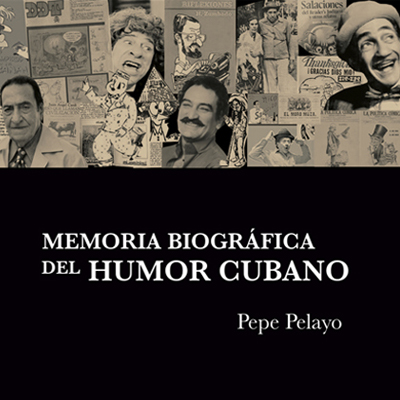
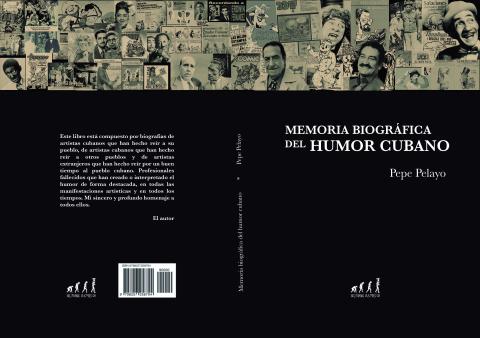
Este nuevo libro — Memoria biográfica del humor cubano— es el resultado de una larga investigación biográfica, entrevistas y experiencias. Podríamos decir que es la culminación de este extenso recorrido, sin embargo, cabe destacar que se trata de una obra abierta, siempre receptiva a nueva información. En otras palabras, es un importante momento de reflexión sobre lo ya alcanzado en el estudio del humor cubano.
Es un diccionario biográfico, sin ser un diccionario. Es una enciclopedia del humor cubano, sin serlo. Es… Por un lado, los registros biográficos están ordenados alfabéticamente, lo que simplificó la obra, pero, para el público general, se pierde un poco el contexto histórico de cada personaje. Eventualmente, la cronología podría haberse dividido por periodos históricos, pero esto dificultaría la estructura de un diccionario biográfico, obligando a reiniciar el orden alfabético para cada periodo, e incluso repitiendo biografías en ocasiones, dado que los artistas vivieron en diferentes épocas históricas. Como bien señala, dadas las dificultades y la distancia que lo separan de las fuentes de información, es decir, de Cuba, esta era la única opción posible para rescatar la memoria cultural del humor cubano.
El libro no comienza con un «érase una vez…», sino con la cuestión antropológica de qué significa ser cubano, o mejor dicho, con la quimérica pregunta de qué es el humor cubano. Siempre recurre a esta faceta pedagógica para diferenciar qué puede o no considerarse humor, cuestionando las tradiciones lingüísticas y las costumbres sociales para llegar a la esencia de ser comediante o humorista en Cuba.
La pregunta es: ¿Es Cuba un país de estados de ánimo? ¿Es un espacio social con características específicas? Una cosa es segura: un pueblo que sufre, pero que siempre ha sabido sobrevivir con una amplia sonrisa, aunque a veces sea solo su costumbre de bromear. Sin embargo, como demuestra Pepe, esa tierra, al propiciar el florecimiento de tantos creadores de gran calidad, evidencia la fertilidad de su cultura, ya que cada hombre, más allá de su propio espíritu, es producto de lo que lo rodea en el momento y de su herencia creativa social.
Así, de la A a la Z, Pepe, junto con los datos biográficos de estos casi setecientos artistas mencionados, desmantela las estructuras creativas de cada uno, sin limitarse a un solo género creativo, sino abarcando todos los géneros creativos y profesionales vinculados al humor. Se trata, pues, de un viaje a través de personalidades, organismos y agrupaciones, dejando aquí y allá una reflexión filosófica, una introspección teórica, pintando el paisaje cubano con su espíritu y sabiduría.
No satisfecho con esta riqueza de información, fruto de muchos años de investigación histórica, complementa el libro con un arte que le apasiona explorar y perfeccionar en su constante labor de promoción y difusión del humor: la entrevista. «A tal humor, tal honor» es la recopilación directa de información, dando voz a los creadores o, en última instancia, a sus familias. El lado más humano, y menos el aspecto teórico e histórico, destaca en estas conversaciones siempre enriquecedoras y cautivadoras, que permiten una mejor comprensión de los artistas.
Como él mismo explica, en esencia, estas entrevistas fueron el embrión del libro, no un epílogo, como terminó siendo en la maquetación. Sin embargo, la enorme cantidad de nombres seleccionados haría imposible editar entrevistas con todos ellos (unas 20 páginas por entrevista). En cualquier caso, quedan siete que destacarán en esta avalancha de información sobre humoristas cubanos. Aquí, es la vida, las experiencias, los sentimientos de cada uno lo que nos ofrece el retrato personal y el del país.
Quienes piensen que este es un libro sobre cubanos para cubanos se equivocan. Claro que ellos disfrutarán más de toda esta riqueza histórica, pero nosotros también. Este libro de Pepe Pelayo, con su exhaustiva información sobre estilos y personalidades que han trascendido fronteras geográficas y humorísticas, termina siendo más universal. Es un enriquecedor viaje enciclopédico a través de nuestra triste cultura que, la mayoría de las veces, ignora precisamente este rico campo de creatividad y sensibilidad social y artística. Gracias, una vez más, Pepe Pelayo, por abrirnos estas puertas, estos caminos de (re)conocimiento.
Review of the book "Biographical Memoir of Cuban Humor"
by Osvaldo Macedo de Sousa
To remember is not only to live, but to be reborn into life through time. Many confuse memory with nostalgia — a backward-looking longing for the past — when in reality it is a pedagogical gaze at the roots of our identity and an introspection on how we can learn from the mistakes and achievements of the past. In our egocentrism, we convince ourselves that we are the most original, the most fantastic, when in reality we are merely recreating, in different disguises and possibly with different subjectivities, what has already been done before.
Pepe Pelayo is not only a great multifaceted humorist, but also a tireless researcher — not only in the realm of theory, but also in the historical study of this very special art that lives and breathes. He is a memoirist, historian, and popularizer of the creators and artists he has encountered throughout his extensive career, as well as of those who influenced him and whom he admires.
His creativity, to our delight, is boundless, and so, alongside his growing bibliography of theoretical and humorous works, we continue to discover gems of memory.
Cuba is a geographical and social space deeply rooted in his soul, for although he, like all emigrants, left Cuba, Cuba never abandoned him — and that is why he always returns to his homeland, even if only through words and memories.
This new book — Memoria biográfica del humor cubano — is the result of lengthy biographical research, interviews, and personal experiences. One might say it is the culmination of this extensive journey; however, it should be noted that this is an open work, always receptive to new information. In other words, it represents an important moment of reflection on what has already been achieved in the study of Cuban humor.
It is a biographical dictionary, without being a dictionary. It is an encyclopedia of Cuban humor, without being one. It is… On one hand, the biographical entries are arranged alphabetically, which simplified the work, but for the general public, some of the historical context of each figure is inevitably lost. A chronological arrangement divided by historical periods might have been considered, but this would have complicated the structure of a biographical dictionary, requiring the alphabetical order to restart for each period and even resulting in repeated biographies, given that the artists lived across different historical eras. As the author rightly notes, given the difficulties and the distance separating him from his sources of information — that is, from Cuba — this was the only viable option for preserving the cultural memory of Cuban humor.
The book does not begin with "once upon a time…" but rather with the anthropological question of what it means to be Cuban, or more precisely, with the elusive question of what Cuban humor actually is. The author consistently draws on this pedagogical dimension to distinguish what can and cannot be considered humor, questioning linguistic traditions and social customs in order to reach the essence of being a comedian or humorist in Cuba.
The question is: Is Cuba a country of moods? Is it a social space with specific characteristics? One thing is certain: a people who suffer, yet who have always known how to survive with a broad smile — even if at times it is simply their habit of joking. Yet, as Pepe demonstrates, that land, by fostering the flourishing of so many high-quality creators, attests to the fertility of its culture, since every person, beyond their own individual spirit, is a product of their surroundings at a given moment and of their social and creative heritage.
And so, from A to Z, Pepe — alongside the biographical data of nearly seven hundred artists — dismantles the creative structures of each one, without limiting himself to a single creative genre, but encompassing all creative and professional genres connected to humor. This is, in essence, a journey through personalities, institutions, and groups, leaving here and there a philosophical reflection, a theoretical introspection, painting the Cuban landscape with his spirit and wisdom.
Not content with this wealth of information — the fruit of many years of historical research — he complements the book with an art form he is passionate about exploring and refining in his ongoing work of promoting and disseminating humor: the interview. "A tal humor, tal honor" is a direct gathering of information, giving voice to the creators themselves or, as a last resort, to their families. The most human side — rather than the theoretical and historical dimension — shines through in these always enriching and captivating conversations, which allow for a deeper understanding of the artists.
As he himself explains, these interviews were essentially the embryo of the book, not an epilogue, as they ended up being in the final layout. However, the sheer number of names selected would make it impossible to include interviews with all of them (roughly 20 pages per interview). In any case, seven remain that will stand out amid this wealth of information about Cuban humorists. Here, it is the life, the experiences, and the feelings of each individual that offers us a personal portrait — and a portrait of the country itself.
Those who think this is a book about Cubans for Cubans are mistaken. Of course they will enjoy this historical richness more deeply, but so will the rest of us. This book by Pepe Pelayo, with its exhaustive information on styles and personalities that have transcended geographical and humorous boundaries, ultimately becomes something more universal. It is an enriching encyclopedic journey through our broader culture — one that, more often than not, ignores precisely this rich field of creativity and social and artistic sensibility. Thank you, once again, Pepe Pelayo, for opening these doors, these paths of (re)cognition.
(This text has been translated into English by ChatGPT)