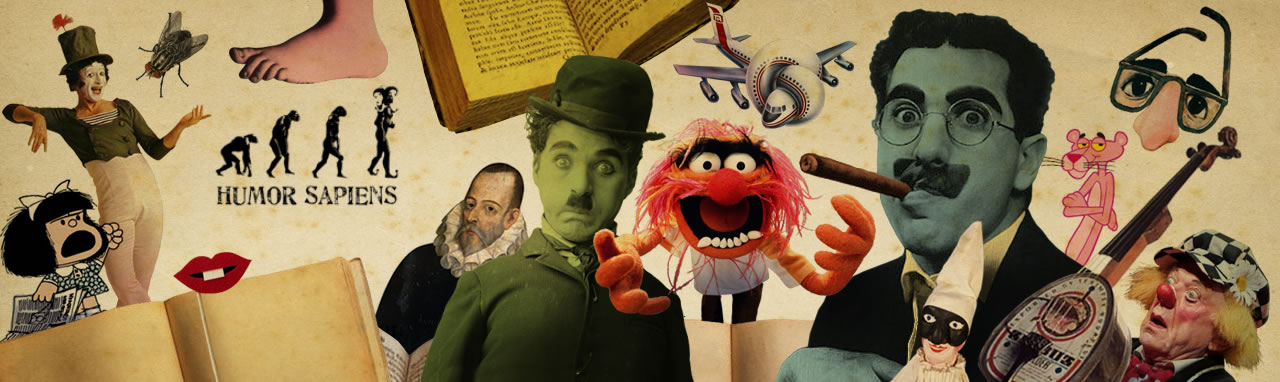

Entrevistas, artículos, ensayos, concursos, investigaciones, hitos de la Historia del humor, efemérides, Salón de humor de la Fama, homenajes póstumos y mucho más.

Ganador del Premio Internacional Humor Sapiens 2026
Declaración de Principios
Humor Sapiens es un espacio independiente dedicado a la creación artística humorística, al estudio y la investigación del humor, a su docencia, promoción y práctica como parte de la vida humana.
Nuestra labor se rige por criterios artísticos, profesionales y académicos, según la naturaleza de cada actividad. Entrevistamos, difundimos, estudiamos y reconocemos a humoristas por su obra, su aporte y su relación con el humor, no por sus afinidades políticas, religiosas o ideológicas, ni por su coincidencia o discrepancia con nuestras propias opiniones.
Defendemos la diversidad de ideas y el derecho a pensar diferente. Por eso, no consideramos que una discrepancia política, religiosa o ideológica, por profunda que sea, constituya por sí misma una razón para invisibilizar a un creador, excluirlo de una iniciativa o desconocer su aporte al humor. Sería contradictorio defender la libertad de expresión y, al mismo tiempo, practicar la exclusión por razones de pensamiento.
Esta apertura no significa renunciar a los principios éticos ni ignorar las responsabilidades individuales. Cuando existan pruebas suficientes de daños reales causados a otras personas, esos hechos podrán ser considerados de acuerdo con su gravedad, su pertinencia y los criterios propios de cada iniciativa. Las acusaciones, por sí solas, no equivalen a hechos demostrados.
Estos principios orientan el conjunto de nuestro trabajo: el Premio Internacional Humor Sapiens, el sitio web, el Boletín Mensual, las entrevistas, las publicaciones y las demás actividades de creación, reflexión, investigación y difusión del humor.
Humor Sapiens no exige afinidad ideológica. Exige respeto por la diversidad, rigor en sus criterios y compromiso con el humor como creación, conocimiento y experiencia humana.


XIII Aniversario de Humor Sapiens | Humor Sapiens Turns 13
Novedades del mes:
Artículos, entrevistas, ensayos, reseñas, reflexiones y más:
Vis a vis con la vis cómica:
Entrevista a Pavel Constantin (Rumanía) | por Pepe Pelayo (Cuba-Chile)
Museos del humor del mundo:
Estados Unidos (II) | por Osvaldo Macedo de Sousa (Portugal)
Humores visuales:
Pedro Ribeiro Ferreira, un caricaturista accidental | por Francisco Puñal Suárez (Cuba-España)
Don Humor:
Historia del humor | por Don L. F. Nilsen (USA)
Ay, humor, ay humor:
Humoristas orales que también hacen humor gráfico | por Félix Caballero Wangüemert (España)
Contrapuntos a dos voces:
El suicidio de la sonrisa | por Osvaldo Macedo de Sousa (Portugal) y Pepe Pelayo (Cuba-Chile)
El mexicano Münchhausen:
Eco y el humor | por Ricardo Guzmán Wolffer (México)
100 Consejos para hacer reír:
Consejo 11: Adjetivos arbitrarios | por Enrique Gallud Jardiel (España) y Pepe Pelayo (Cuba-Chile)
Humor de Croacia:
Entrevista a Marko Reisinger (Croacia| por Dražen Jergović (Croacia)
Cosas del mes:
Octubre, 2026 | Cristina Sampaio (Portugal) / André Carrilho (Portugal) | por Osvaldo Macedo de Sousa (Portugal)
Cuaderno de un humorista:
No. 4.- "Persona y personaje" | por Pepe Pelayo (Cuba-Chile).
Humor Sapiens informa
√ Se lanza el libro "Cuaderno de un humorista"
√ Día mundial de la sonrisa, ¿por qué se celebra el 4 de octubre?
√ Lanzamiento del libro "Humor hecho pelota"
√ I Seminario Internacional Siglo de Oro. Lope antes de Lope: hacia la formación de la comedia nueva
√ Presentación de libro "Una calavera del montón", de Manuel Álvarez Junco
√ Abre Museo Mario Moreno "Cantinflas" en Ciudad de México
√ XV Edición de los Premios de Humor Gráfico GIN-UAH
√ Hermeregildo Sábat en la Revista Marcha
√ Bienal Internacional de Caricatura
√ Premio de Cultura Otero Pedrayo 2026 para tres humoristas
√ Revista de humor croata lanza convocatoria para colaboradores
√ Concurso de Calaveritas Literarias
√ Publicaciones humorísticas del mundo que recibimos este mes
Humor Sapiens recomienda
Ensayos, análisis, teorías, reflexiones y otros textos sobre el humor
* Prólogo del libro "Cuaderno de un humorista" por Manolo de la Portilla
* Meditaciones sobre *Cuaderno de un humorista* de Pepe Pelayo
* ¡Un cuaderno de un humorista! Por Aziz Yavuzdoğan
* El sentido del humor, una virtud
* Camilo José Cela y el humor
* Ucronías en el punto ciego del humor negro: el deseo de cambio de Silvina Ocampo
* El humor como medio cognitivo
* El recurso didáctico del humor
* A reír junto a los simios
* ¿Tienen sentido del humor los animales?
* El eco de una carcajada
* Filosofando con humor
* EL HUMOR, dialéctica innata
* El humor es otra de las armas del alma en la lucha por la supervivencia
* Cuáles son los circuitos cerebrales detrás de cada carcajada
* Reflexiones epistemológicas sobre el humor
* La tauromaquia de Goya
* Nuevo estudio sobre concursos internacionales de caricatura
Del libro Breve historia del humor | por Pepe Pelayo
Aro Aro
Reseña: La cueca cuyana, el gato, la polca "pampeana" y la ranchera argentina tuvieron la característica de incorporar el "aro-aro". Se trata de un grito que interrumpe la danza o la música, y abre un momento para el recitado de coplas humorísticas o picarescas.
Data: No hay consenso sobre su origen sudamericano. Algunos estudiosos creen que viene del mapudungun “aro—aro” que significa con permiso. Pero podría venir del quechua ¡ari! ¡ari! Y significar “así” o “muy bien”. O del aymara “aro”, que quiere decir mandamiento. Lo que no hay dudas es que se originó en los tiempos de la colonia.
Humor Gráfico
Artículos | Concursos | Entrevistas a colegas gráficos& | Envejecer con humor | Humores del mundo | Humores visuales | Museos del humor | Contrapunto a dos voces.
Humorología infantil
Literatura infantil y humor | Pedagogía del humor | Método “Gracias por leer” | Entrevistas escritores infantiles
Humorología
Teoría del Humor (Sapiens) | Artículos y ensayos | Diccionario del humor | Vis a vis (entrevistas) | Risoterapia | El bufón ilustrado (videos) | Investigaciones y estudios sobre el humor | 100 Consejos para hacer reír | El laboratorio del humor (videos).
Humorofilia
Salón de Humor de la Fama | Homenajes póstumos | Citas célebres | Curiosidades | Efemérides
Humoroteca
Bibliografía de consulta | Videoteca | Directorio web sobre humor | Fiestas populares | Boletines Humor Sapiens | La reseña del humor | Testimonios sobre Humor Sapiens
Concurso Humor Sapiens 2024
Sobre el Concurso | Resultados del Concurso Internacional Humor Gráfico | Concurso Nacional Escolar de Humor Gráfico.
International Humor Sapiens Award 2025
Call / Convocatoria | Nominees and Award / Nominados y Premios
International Humor Sapiens Award 2026
Call / Convocatoria | Nominees and Award / Nominados y Premio
El bufón ilustrado | The Enlightened Jester

* Serie de 15 videos sobre la teoría y la aplicación del humor en las artes y en la vida. La opinión de 45 prestigiosos humoristas gráficos, literarios, escénicos, audiovisuales y estudiosos del humor, de 13 países.
* A series of 15 videos on the theory and application of humor in the arts and in life. It features the perspectives of 45 prominent figures—including graphic, literary, performing, and audiovisual humorists, as well as scholars of humor—from 13 countries.
|
|
Winner of the 2026 International Humor Sapiens Award
Statement of Principles
Humor Sapiens is an independent space dedicated to artistic humorous creation, the study and research of humor, its teaching, promotion, and practice as part of human life.
Our work is guided by artistic, professional, and academic criteria, depending on the nature of each activity. We interview, promote, study, and recognize humorists for their work, their contribution, and their relationship with humor, not for their political, religious, or ideological affiliations, nor for their agreement or disagreement with our own opinions.
We defend diversity of ideas and the right to think differently. For this reason, we do not consider that a political, religious, or ideological disagreement, no matter how deep, constitutes in itself a reason to make a creator invisible, exclude them from an initiative, or ignore their contribution to humor. It would be contradictory to defend freedom of expression while simultaneously practicing exclusion based on belief.
This openness does not mean renouncing ethical principles or ignoring individual responsibilities. When there is sufficient evidence of real harm caused to other people, those facts may be considered according to their severity, relevance, and the specific criteria of each initiative. Accusations, on their own, do not amount to proven facts.
These principles guide all of our work: the Humor Sapiens International Award, the website, the Monthly Newsletter, interviews, publications, and all other activities related to the creation, reflection, research, and dissemination of humor.
Humor Sapiens does not require ideological affinity. It requires respect for diversity, rigor in its criteria, and a commitment to humor as creation, knowledge, and human experience.
New products this month:
Articles, interviews, essays, reviews, reflections and more:
Vis à Vis with the comic vis:
Interview with Pavel Constantin (Romania) | by Pepe Pelayo (Cuba-Chile)
Humor Museums around the world:
United States (II) | by Osvaldo Macedo de Sousa (Portugal)
Visual Humors:
Pedro Ribeiro Ferreira, an accidental caricaturist | by Francisco Puñal Suárez (Cuba-Spain)
Ay, humor, ay, humor:
Stand-up Comedians Who Are Also Graphic Humorists | by Félix Caballero Wangüemert (Spain)
Don Humor:
The History of Humor | by Don L. F. Nilsen (USA)
Two-voice counterpoints:
The Suicide of the Smile | by Osvaldo Macedo de Sousa (Portugal) and Pepe Pelayo (Cuba-Chile)
The Mexican Münchhausen:
Eco and Humor | by Ricardo Guzmán Wolffer (Mexico)
100 Tips to Make People Laugh:
Tip 11: Arbitrary adjectives | by Enrique Gallud Jardiel (Spain) and Pepe Pelayo (Cuba-Chile)
Croatian Humor
Interview with Marko Reisinger (Croatia) | by Dražen Jergović (Croatia)
Cases of the Month
October | Cristina Sampaio / André Carrilho | by Osvaldo Macedo de Sousa
Notebook of a Humorist
No. 4.- Person and character | by Pepe Pelayo (Cuba-Chile)
Humor Sapiens reports
√ The book "Cuaderno de un humorista" is released
√ World Smile Day: why is it celebrated on October 4th?
√ Launch of the book "Humor hecho pelota"
√ 1st International Golden Age Seminar. Lope Before Lope: Towards the Formation of the *Comedia Nueva*
√ Presentation of the book "Una calavera del montón," by Manuel Álvarez Junco
√ Mario Moreno "Cantinflas" Museum Opens in Mexico City
√ 15th GIN-UAH Graphic Humor Awards
√ Hermeregildo Sábat in *Marcha* Magazine
√ Croatian humor magazine issues call for contributors
√ Literary *Calaverita* Contests
√ International Caricature Biennial
√ Otero Pedrayo Culture Award 2026 for three comedian
√ Humorous publications from around the world that we received this month
Humor Sapiens recommends
Essays, analyses, theories, reflections, and other texts on humor
* Foreword to the book "Notebooks of a Humorist" by Manolo de la Portilla
* Meditations on *Notebook of a Humorist* by Pepe Pelayo
* A humorist’s notebook! By Aziz Yavuzdoğan
* A sense of humor, a virtue
* Camilo José Cela and Humor
* Uchronias in the blind spot of black humor: Silvina Ocampo’s desire for change
* Humor as a cognitive medium
* The pedagogical use of humor
* Laughing along with the apes
* Do animals have a sense of humor?
* The echo of a burst of laughter
* Philosophizing with humor
* HUMOR, an innate dialectic
* Humor is another of the soul’s weapons in the struggle for survival
* What are the brain circuits behind every burst of laughter?
* Epistemological reflections on humor
* Goya’s Bullfighting
* New study on international caricature competitions
From the book A Brief History of Humor | by Pepe Pelayo
Aro Aro
Review: The *cueca cuyana*, the *gato*, the "Pampean" *polka*, and the Argentine *ranchera* all featured the "aro-aro"—a shout that interrupts the dance or music, creating a pause for the recitation of humorous or risqué verses.
Date: Associated with *Commedia dell'arte*—which emerged in Italy in the 16th century but had its origins in the Middle Ages—the character definitively lost his original proportions with the advent of Harlequinades, a British comic theatrical genre.
Graphic Humor
Articles | Contests | Interviews with Graphic Artists | Aging with Humor | Humors of the World | Visual Humors | Museums of humor | Two-voice counterpoint
Children’s Humorology
Children's Literature and Humor | Humor Pedagogy | "Thanks for Reading" Method | Interviews with Children's Writers
Humorology
Humor Theory (Sapiens) | Articles and Essays | Humor Dictionary | Vis à Vis (Interviews) | Laughter Therapy | The Illustrated Jester (Videos) | Research and Studies on Humor | 100 Tips to Make People Laugh | The Humor Laboratory.
Humorophilia
Humor Hall of Fame | Posthumous Tributes | Famous Quotes | Curiosities | Anniversaries
Humor Archive
Reference Bibliography | Video Library | Humor Web Directory | Popular Festivals | Humor Sapiens Bulletins | Humor Reviews | Testimonials about Humor Sapiens
Humor Sapiens 2024 Contest
About the Contest | Results of the International Cartoon Contest | Results of the School Graphic Humor Contest
International Humor Sapiens Award 2025
Call / Convocatoria | Nominees and Award / Nominados y Premios
International Humor Sapiens Award 2026
Thank you so much | Muchas gracias
“Create, think and live with humor” | "Crear, pensar y vivir con humor!
humorsapiens.com
Cancelar suscripción | Unsubscribe

"Crear, pensar y vivir con humor".